
lawn aerator tool manual spike models are a practical way to relieve compacted soil when you want a simple tool, a bit of exercise, and more control than a powered machine.
If your lawn stays soggy after rain, feels hard underfoot, or you keep watering and fertilizing but the grass still looks stressed, compaction is often the real problem. Aeration creates pathways for air, water, and nutrients to move into the root zone, which is where the lawn either recovers or keeps struggling.
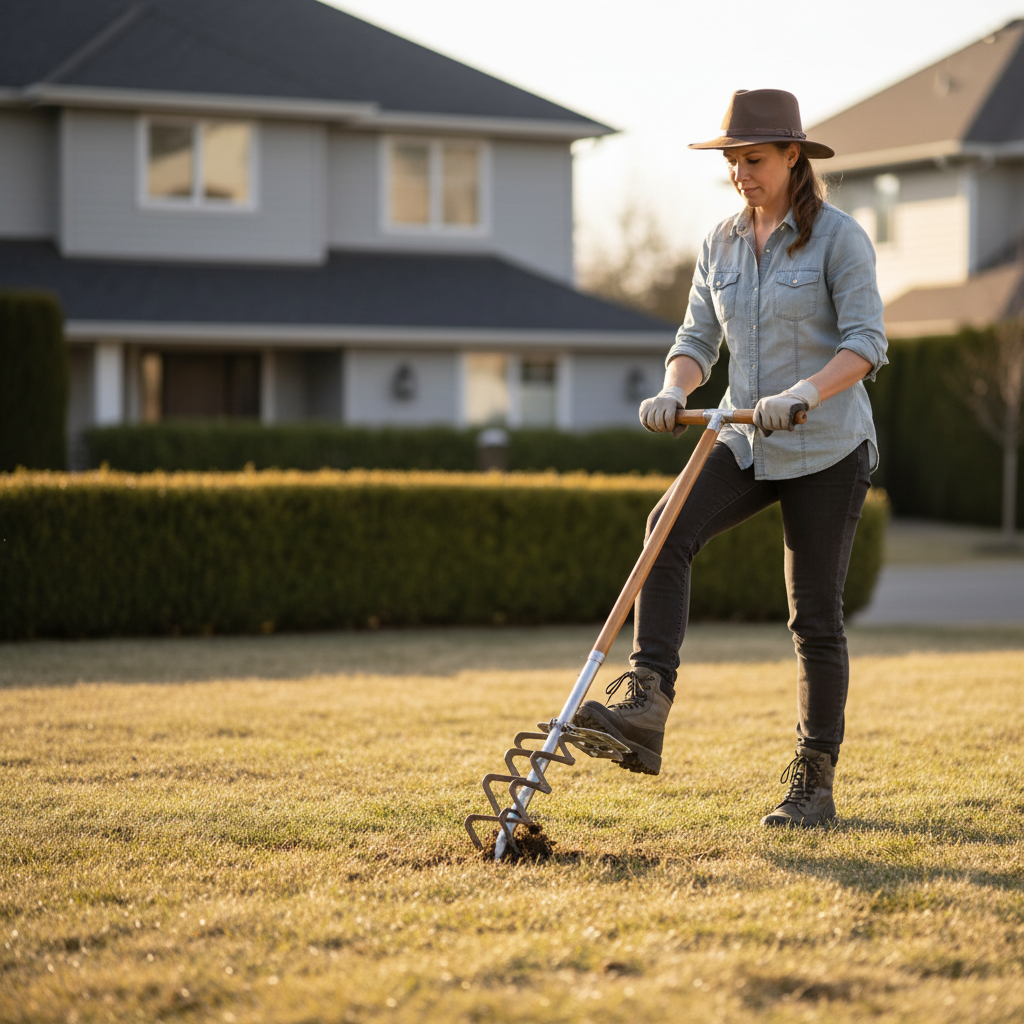
The good news is you do not always need a rental core aerator to see improvement. Manual spike tools can be enough for small yards, targeted trouble spots, and routine maintenance, as long as you use them at the right time and you keep expectations realistic.
One quick misconception to clear up, “spikes” and “plugs” are not the same. Spikes poke holes, plug aerators remove small soil cores. Both can help, but they behave differently in clay, high-traffic lawns, and heavily compacted areas.
What a manual spike aerator does, and what it does not
A manual spike aerator drives solid tines into the soil, creating narrow channels that can temporarily improve infiltration and gas exchange. It is straightforward, usually affordable, and easy to store.
Where it disappoints is when the soil is already very dense. In heavy clay, spikes may push soil sideways and compress the walls of the hole, which can limit long-term benefit unless you pair aeration with topdressing or soil improvement.
Best use cases tend to look like this:
- Small lawns where a rental machine feels like overkill
- Localized compaction near gates, play areas, dog runs, or around patio edges
- Preventive maintenance when the turf is mostly healthy
- When you plan to topdress with compost or sand/compost mix afterward
Not ideal for these situations:
- Severely compacted clay across the whole yard
- Lawns with persistent standing water where grading or drainage may be the root cause
- Large properties where the labor becomes unrealistic
Why lawns compact in the first place (real-world causes)
Compaction is rarely mysterious, it is usually lifestyle and soil type. Many yards get compacted even when the homeowner “does everything right,” because the soil and traffic patterns quietly stack the odds against you.
- Foot traffic and pets: repeated paths create hard lanes, especially when soil is wet.
- Clay-heavy soils: common in many U.S. regions, clay particles pack tightly and drain slowly.
- Mowing when wet: wheels and turns press the soil down, the lawn may look fine until summer stress hits.
- Thatch confusion: thick thatch can act like a sponge layer, water sits above soil and roots stay shallow.
- New construction fill: subsoil, debris, or heavy equipment pressure can leave a “dead” base layer.
According to the USDA Natural Resources Conservation Service, soil compaction reduces pore space, which limits movement of air and water. That is the underlying reason aeration can help, you are trying to reopen those pathways, even if only partially.
Quick self-check: do you need a manual spike tool, or something stronger?
Before you buy or start stabbing holes across the whole yard, it helps to classify your situation. A lawn aerator tool manual spike can be a smart choice, but it is not the right fix for every lawn.
Five-minute assessment
- Screwdriver test: after watering or a rain, can you push a screwdriver 3–4 inches into soil with moderate effort? If it barely moves, compaction is likely.
- Water behavior: does water run off quickly or puddle for a long time?
- Root depth: pull a small plug of turf, do you see shallow roots (1–2 inches) even in season?
- Traffic map: do stressed areas match walking routes or play zones?
- Soil type: if you have sticky clay that forms ribbons when wet, spikes may need support steps (topdressing).
If most signs point to “severe” and widespread, a core aerator rental or a lawn service may be more efficient. If the problem is spotty or mild-to-moderate, manual spikes are often enough to move the needle.
Manual spike vs core aeration: practical comparison
This is where many homeowners get stuck. They hear “core is better,” and stop there. In reality, it depends on lawn size, soil, budget, and what you plan to do after aeration.
| Factor | Manual Spike Aerator | Core (Plug) Aerator |
|---|---|---|
| Typical best for | Small lawns, spot treatment, routine touch-ups | Whole-lawn compaction, clay soils, renovation |
| Soil impact | Makes holes, may compress sides in heavy clay | Removes soil plugs, reduces compaction more reliably |
| Effort | Higher physical effort, slower coverage | Lower per square foot, but involves rental/transport |
| Cost | Lower upfront | Rental or service cost, higher but faster |
| Best paired with | Topdressing, wetting soil properly, overseeding small areas | Overseeding, topdressing, full lawn recovery plan |
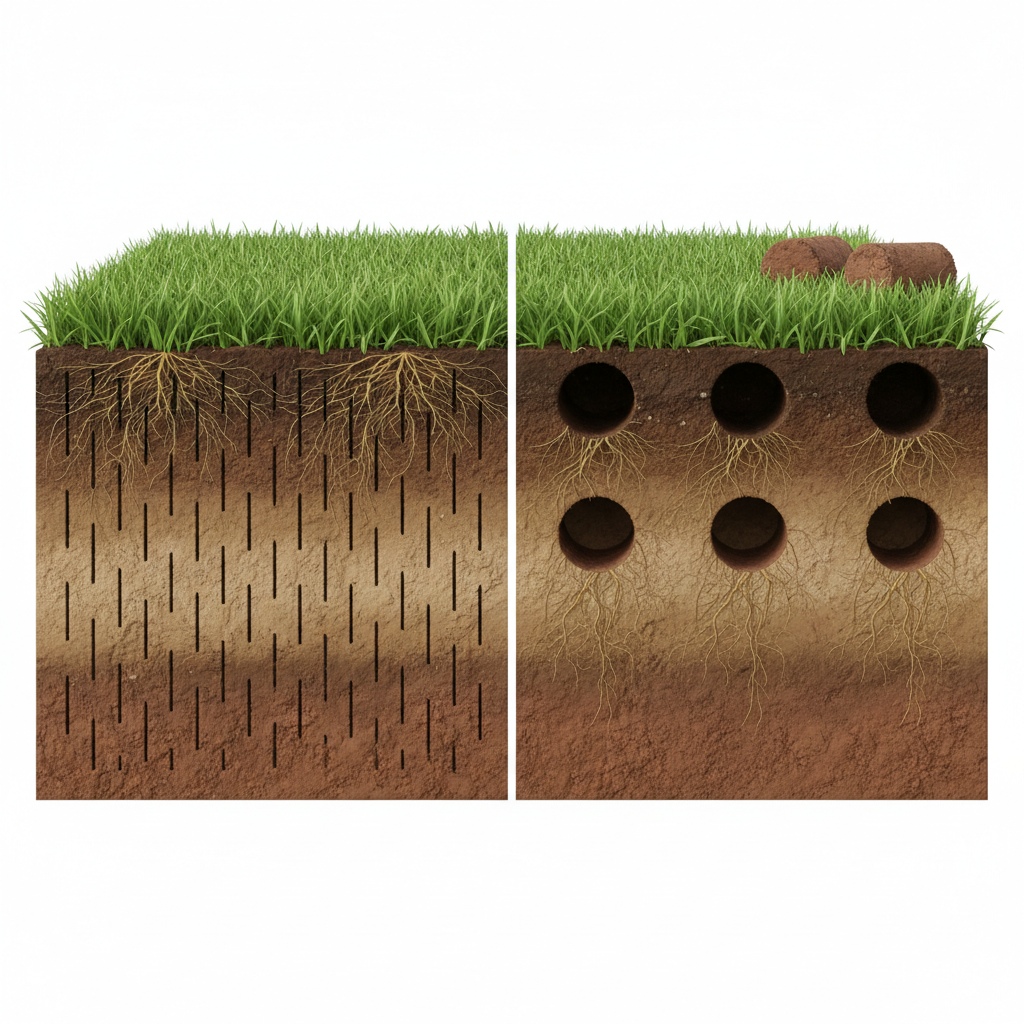
My honest take, if you have a small urban yard or you only need to open up a few compacted runs, spikes are a reasonable tool. If you are trying to rescue a tired lawn on clay, spikes alone can feel like busywork unless you add compost and address traffic.
How to use a manual spike aerator (steps that actually matter)
Using a lawn aerator tool manual spike is simple, but results usually come down to timing, moisture, and what you do after you make holes.
1) Pick the right day
- Aim for soil that is moist, not muddy. If you can form a wet ball that oozes water, wait.
- Many cool-season lawns do best in early fall or spring. Warm-season lawns often respond best in late spring into summer. Local climate matters, so match aeration to your grass growth period.
2) Mow and clear first
- Mow slightly lower than normal, bag heavy clippings if needed.
- Remove sticks and debris, spikes can deflect off hidden roots and rocks.
3) Work in a pattern, but do not obsess
- Target 2–4 inch spacing in compacted areas as a practical starting point.
- Do extra passes where water puddles or where the grass thins from traffic.
4) Pair it with topdressing when soil is heavy
This is the step people skip, then wonder why the holes “disappear.” A thin topdressing helps keep channels open and improves soil structure over time.
- Spread a light layer of compost, then brush it so it falls into holes.
- If you use sand, do it cautiously and usually mixed with compost unless you understand your soil profile, mismatched layers can create drainage issues.
5) Water lightly, then let the lawn recover
Keep moisture consistent for the next week or two, especially if you overseed. Avoid heavy traffic while the soil rebounds.
Common mistakes that waste effort (and how to avoid them)
Manual aeration can feel like a workout, so it is frustrating when nothing changes. These are the errors that show up most often.
- Aerating bone-dry soil: you bend tines, barely penetrate, and the holes close fast.
- Going too shallow: a quick poke that only pierces the thatch layer does not help roots much.
- Expecting aeration to fix drainage alone: if the yard is poorly graded or downspouts dump water in one spot, address that source too.
- Ignoring compaction causes: if traffic never changes, the problem returns quickly.
- Overdoing it weekly: too much disturbance can stress turf, especially in heat or drought.
According to University of California Agriculture and Natural Resources, aeration is often most effective when combined with good cultural practices like proper irrigation and mowing height. That is a polite way of saying aeration is not magic, it works best inside a broader routine.
When to step up: signs you may need a pro, a core machine, or a soil test
A lawn aerator tool manual spike is not a failure if it cannot solve a bigger underlying issue. Sometimes the smarter move is switching methods.
- Standing water persists after aeration and basic downspout fixes, drainage design or soil layering may be involved.
- Large dead zones where grass will not establish, even with seed and water, could point to compaction plus low organic matter or rubble in the soil.
- Very hard clay across the entire lawn where spikes barely penetrate, a core aerator plus topdressing is often more effective.
- Suspected chemical issues such as extreme pH or salinity, a soil test can clarify, your local extension office is usually a good start.
If you have irrigation lines, invisible pet fences, or shallow utilities, it may be safer to consult a lawn professional before aggressive aeration. When in doubt, mark utilities and follow local guidance.
Key takeaways (so you can decide fast)
- Manual spikes work best for small lawns and targeted compaction, especially when soil is moist.
- Clay soils often need pairing with compost topdressing for longer-lasting benefit.
- Core aeration wins for severe, widespread compaction and faster coverage.
- Timing matters, aerate when your grass is actively growing, not during peak stress.
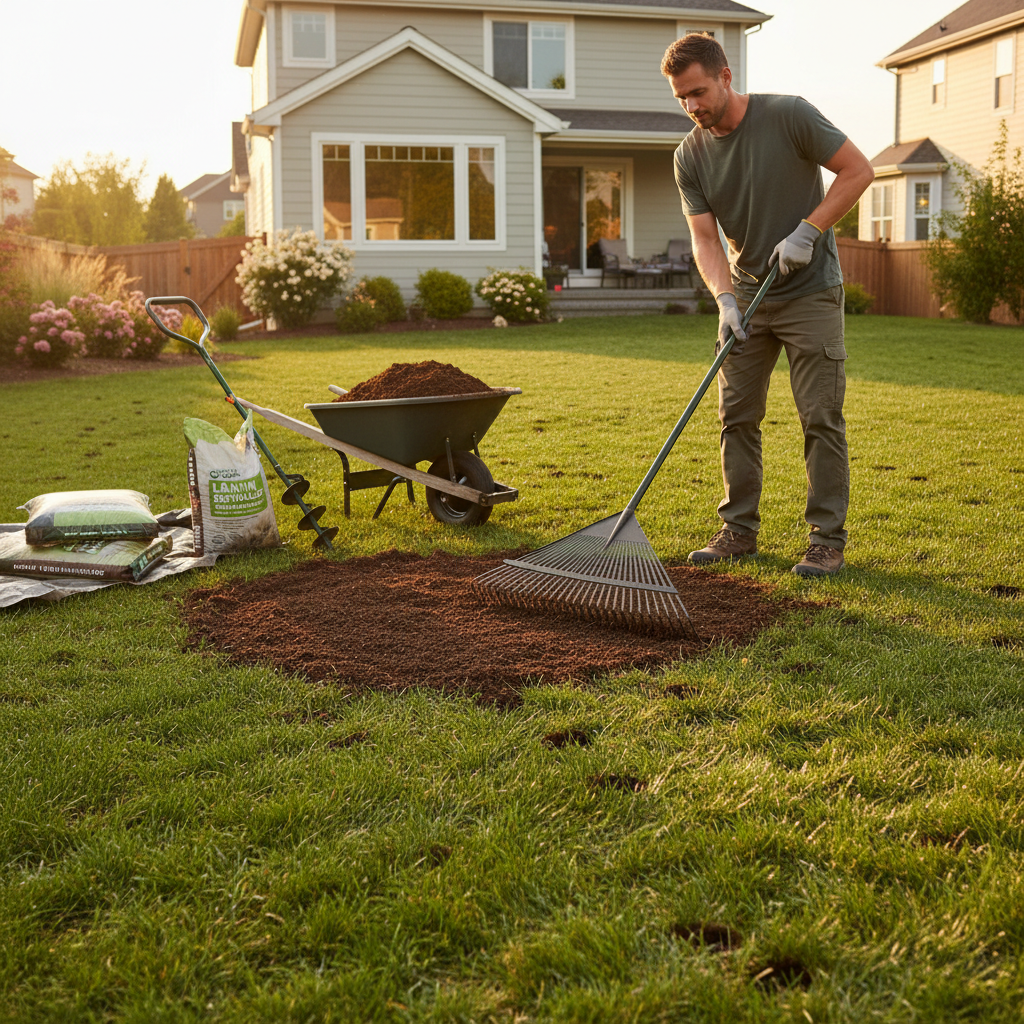
If you want a straightforward plan, aerate when the soil is workable, hit the worst areas twice, then topdress lightly and keep watering consistent for a couple weeks. That combination is where manual tools tend to pay off.
Conclusion: a simple tool, used the right way
A manual spike aerator is not a miracle device, but it is a useful lever when your lawn needs breathing room and you do not want to rent a machine for every little problem. Treat it as part of a routine, not a one-time rescue, and you will usually see better infiltration, healthier roots, and fewer stressed patches over the season.
If you do one thing this week, do the screwdriver test after a good watering, then decide whether you need spot aeration or a bigger reset. That small check saves a lot of effort.
FAQ
Is a lawn aerator tool manual spike good for clay soil?
It can help, especially for surface sealing and small compacted spots, but clay often benefits more when you follow with compost topdressing. If the whole yard is brick-hard, core aeration may deliver more noticeable change.
How deep should manual spike aeration go?
Many homeowners aim for a few inches of penetration, deep enough to reach into the root zone, not just poke the thatch layer. Depth depends on soil moisture and tine length, forcing it in very dry soil tends to backfire.
How often should I aerate with a manual spike tool?
For mild compaction, once or twice during the active growing season is common. High-traffic lanes might need more attention, but frequent aggressive aeration can stress turf, so watch how your lawn responds.
Should I water before using a manual spike aerator?
Yes, in many cases. Moist soil allows better penetration and cleaner holes, which is one reason people aerate a day after rain or after a controlled watering.
Can spike aeration help with thatch?
It can improve water movement through a thatchy surface, but it does not remove thatch. If thatch is thick, a dethatching approach may be more direct, and aeration becomes a supportive step.
Is it okay to overseed right after spike aeration?
Often yes, especially for small thin areas, because holes can improve seed-to-soil contact. For full overseeding projects, core aeration is commonly preferred, but spikes can still be useful if you keep seed moist and protect it from traffic.
Do I need to pick up anything after spike aeration?
No soil plugs come up, so cleanup is minimal. The more meaningful “after step” is brushing compost into holes so the benefit lasts longer, especially in heavier soils.
If you are trying to decide whether a manual spike tool is enough for your yard, it usually comes down to lawn size, soil type, and how much of the problem is concentrated in a few spots, if you describe your grass type, soil, and the areas that stay wet or thin, it becomes easier to pick a plan that feels worth the effort.