
Tool chest metal drawer setups solve a very specific garage problem, you own enough tools to be dangerous, but not enough space or patience to keep them all visible and sorted.
If your “system” is a mix of open shelves, cardboard boxes, and one sticky utility drawer, you already know the pain, you buy duplicates because you can’t find what you own, you waste time mid-project, and sharp stuff ends up where hands shouldn’t go.
This guide helps you pick a metal drawer tool chest that fits how you actually work in a garage, not just what looks good in a product photo, we’ll cover sizing, drawer layouts, casters vs fixed, and the small details that usually decide whether you love it or quietly hate it.
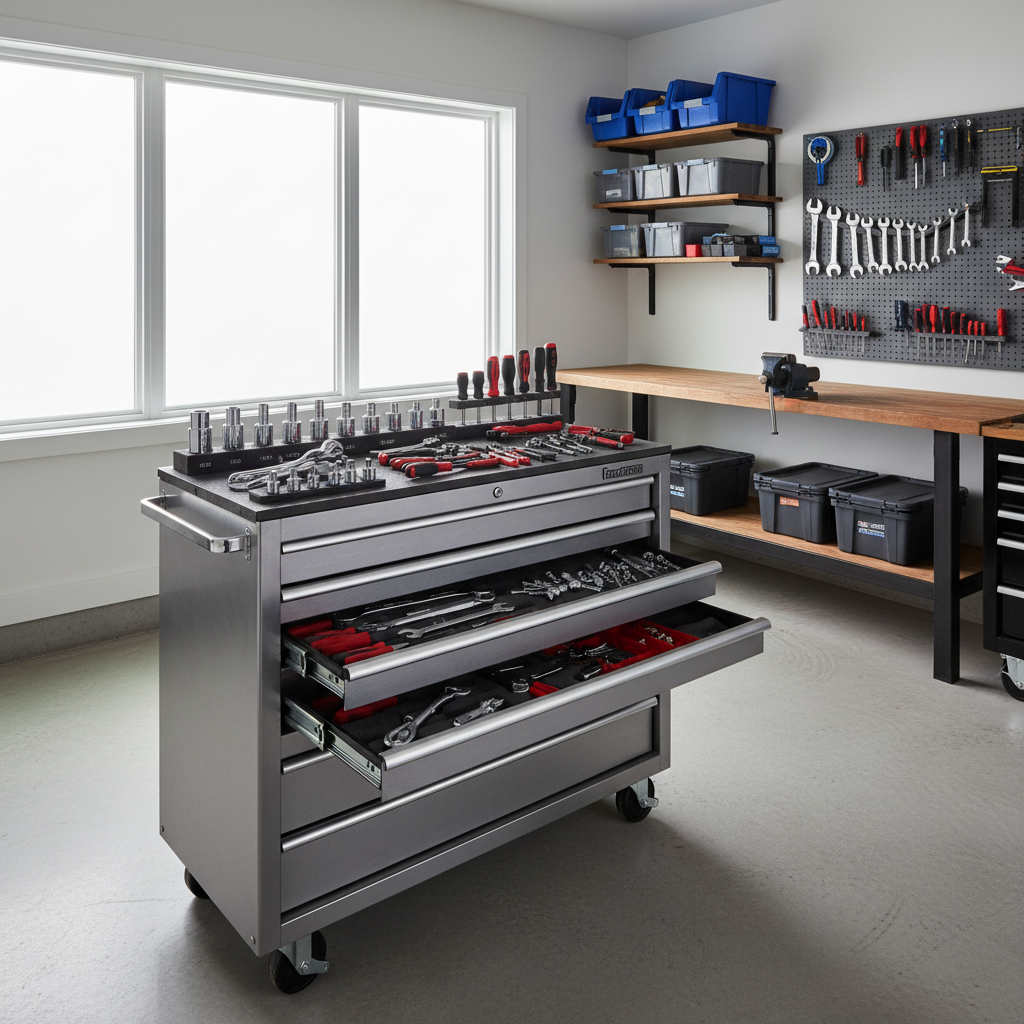
What a metal drawer tool chest does better than shelves
Open storage looks convenient, until dust, humidity, and constant reshuffling wear you down. A metal chest with drawers wins because it turns “pile management” into actual categories.
- Faster access: drawers let you group by task, sockets together, electrical together, measuring together.
- Tool protection: enclosed drawers reduce dust and keep small parts from walking off.
- Safer garage: sharp or heavy tools sit lower, not on a top shelf waiting to fall.
- Better use of vertical space: more storage in the same footprint, especially with deeper lower drawers.
Also, metal matters. Many garages swing hot to cold, sometimes damp, and thin plastic drawers can warp, crack, or sag when you load them with steel tools.
Why tool chests fail in real garages (and how to avoid it)
Most disappointment isn’t about the color or brand, it’s about a mismatch between the chest design and your tool habits.
Common mismatch #1: drawer layout doesn’t match your tool mix
If you own lots of power tools or bulky kits, a chest full of shallow drawers becomes frustrating fast. You want at least a few deep drawers for drills, grinders, nailers, and boxed sets.
Common mismatch #2: weight capacity gets ignored
People overload the “middle” drawers with sockets and wrenches because it feels convenient, then the slides start binding. According to OSHA (Occupational Safety and Health Administration), good housekeeping and safe storage reduce workplace hazards; while your garage isn’t a jobsite, the same logic applies when heavy tools shift, jam, or fall.
Common mismatch #3: mobility is chosen for the wrong reason
Casters are great when you truly move the chest to the car, the driveway, or different bays. But if your garage is tight, a rolling unit can become a constant “parking problem.” Fixed placement plus a small portable tote sometimes works better.
Quick self-check: what size tool chest fits your garage?
Before you shop, answer these quickly. It saves you from buying a chest that’s either cramped on day one or so large it blocks everything you actually use.
- How many “daily” tools? If you reach for the same 30–60 pieces weekly, prioritize top drawers and organization trays.
- Do you store power tools inside? If yes, you’ll want multiple deep drawers or a bottom bay.
- Do you work from a single spot? If you have one workbench, a stationary chest beside it often feels cleaner than a rolling cart.
- How wide is your path? Measure the tightest walkway, then leave space for drawers to open fully.
- What’s your “future tool” plan? Many people expand, so leaving 15–25% empty capacity usually avoids a second purchase too soon.
If you’re unsure, start by measuring the wall area you can dedicate, then work backward from footprint. A tool chest metal drawer unit that forces you to shuffle cars or bikes every time you open it won’t feel like an upgrade.
Choosing features that actually matter (not just marketing)
Specs can look impressive, but a few features do most of the real work.
1) Drawer slides and real-world load
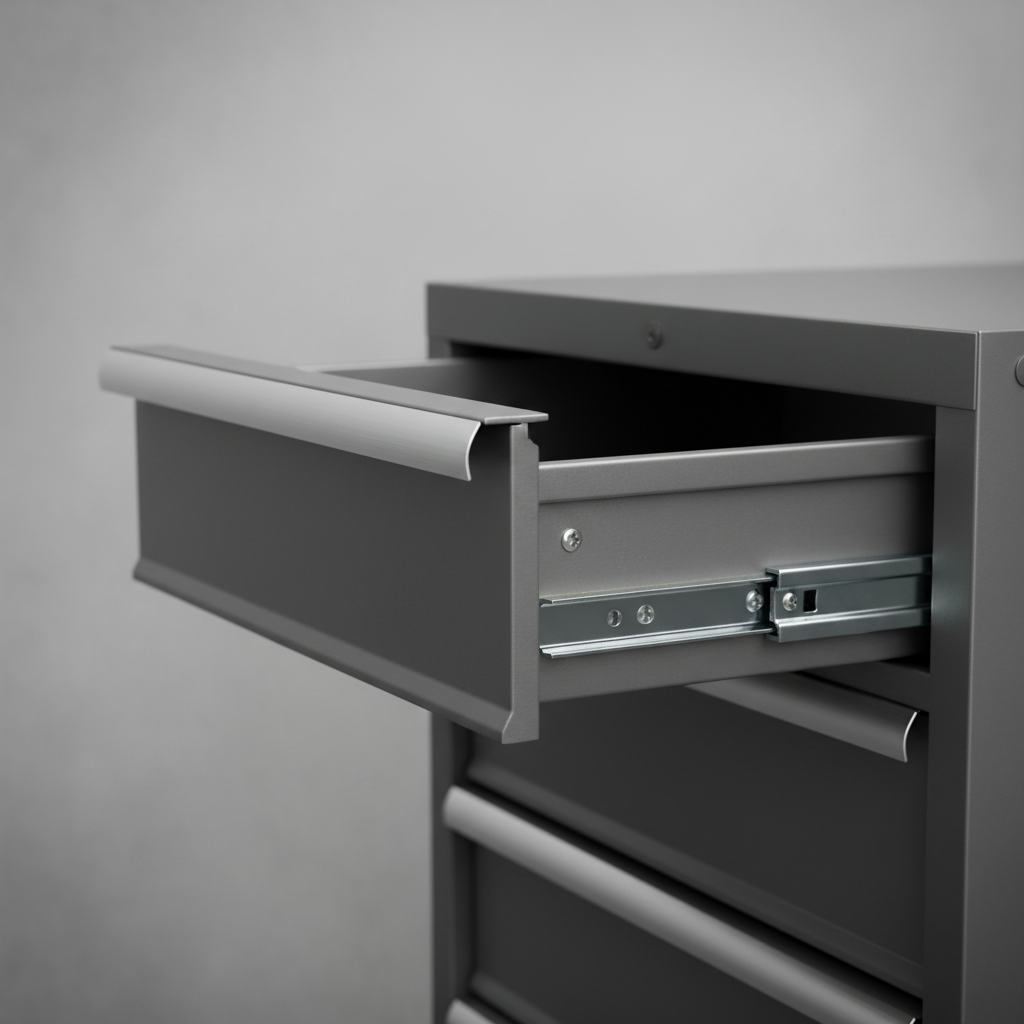
Look for smooth ball-bearing slides and a weight rating that fits how you store. Socket sets get heavy quickly, deep drawers with reinforced slides make life easier.
2) Steel gauge and frame stiffness
Thicker steel tends to resist racking, meaning the cabinet stays square when you roll it or load it unevenly. You don’t need “tank-grade,” but you do want doors and drawers that don’t flex under normal use.
3) Locking system
Locks are less about “security theater” and more about keeping drawers shut when rolling, and keeping kids out of sharp tools. If you store chemicals or blades, consider additional safety steps and follow label guidance.
4) Drawer liners and dividers
Linings cut noise, prevent sliding, and reduce rust risk by keeping tools from sitting in micro-puddles if the garage gets humid. Dividers turn a decent chest into a usable system.
Practical buying guide (with a simple comparison table)
Below is a realistic way to compare common garage setups. The “right” choice depends on your space and the kind of projects you do.
| Option | Best for | Trade-offs | What to check |
|---|---|---|---|
| Top chest + rolling cabinet combo | Mixed tools, growth over time | Taller, can feel top-heavy if overloaded | Drawer slide rating, caster quality, overall height |
| Wide rolling cabinet (no top) | Workbench-side storage | Less vertical storage | Deep drawer count, flat top durability |
| Tool cart (small) | Quick jobs, tight garages | Outgrows fast for serious DIY | Stability, handle comfort, brake locks |
| Stationary base cabinet with drawers | Permanent layout, limited floor movement | Not portable | Leveling feet, anchoring options, drawer clearance |
If your main goal is “stop losing tools and stop rebuying,” the combo units usually win. If your main goal is “keep a clean walkway,” a wide base cabinet tucked under a counter can be the calmer choice.
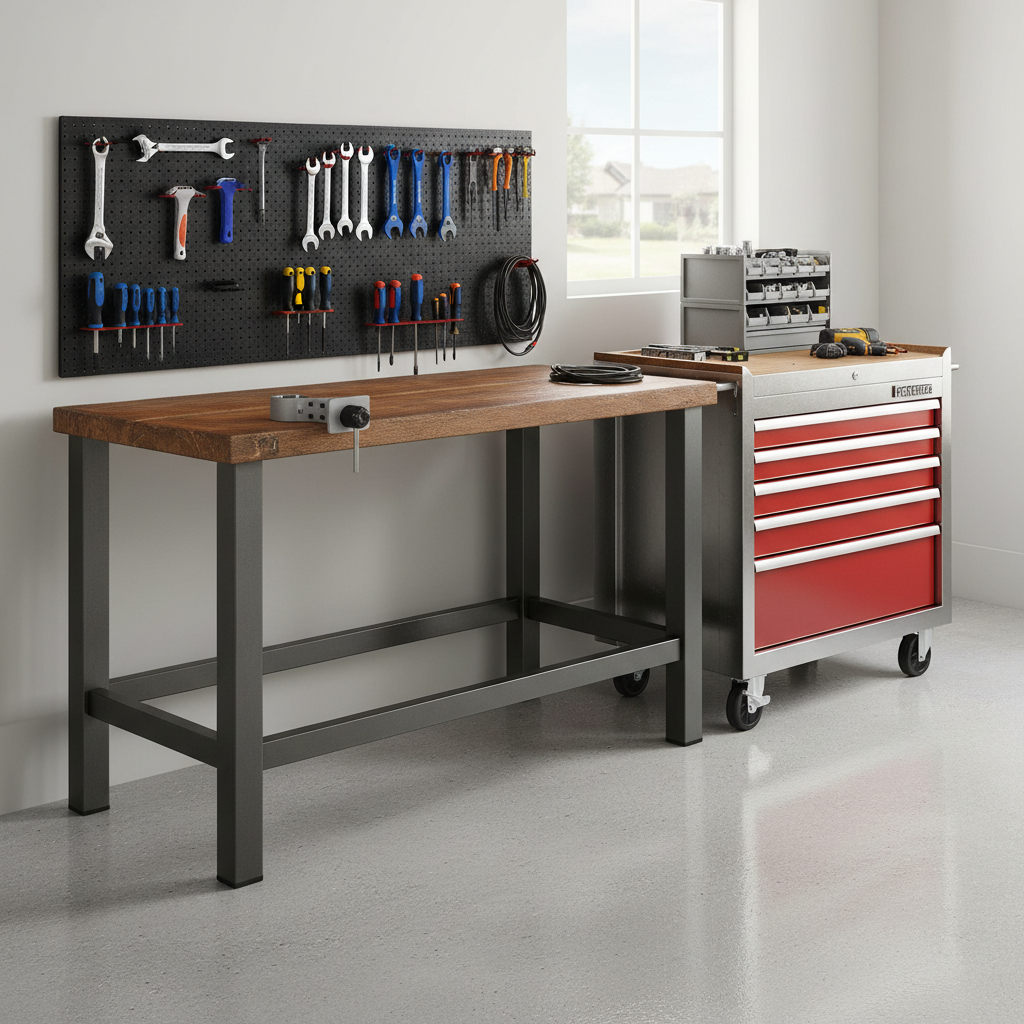
Set it up once, then enjoy it: a simple organization workflow
A tool chest metal drawer setup only pays off if the layout matches your brain. Here’s a workflow that tends to stick.
- Start with “frequency,” not categories: top drawers for daily tools, lower drawers for occasional tools.
- Assign deep drawers early: power tools, impact sockets, large wrenches, pullers.
- Use drawer liners everywhere: it reduces sliding and makes the chest feel quieter and higher quality.
- Label lightly: one label per drawer front, avoid micro-labeling that you’ll stop following.
- Keep a junk drawer on purpose: one “misc” drawer prevents five drawers from becoming misc.
Small trick that helps, reserve one shallow drawer for “in-progress” items, the fastener you’ll use again tomorrow, the specialty bit you don’t want to misplace. It keeps your work surface from turning into storage.
Safety and maintenance: what most people skip
Garages are rough environments. A few habits keep drawers running smooth and keep you safer around heavy steel.
- Anchor tall units if needed: if you have kids or uneven floors, anchoring may reduce tip risk. Follow the manufacturer guidance, and if your situation feels complicated, ask a professional installer.
- Don’t overload top drawers: heavy sockets up top raise the center of gravity and can make rolling units feel unstable.
- Use brakes every time: a chest that creeps while you pull a drawer can pinch fingers or slam shut.
- Wipe and dry tools before storage: especially after outdoor work, moisture trapped in drawers can encourage rust.
- Check caster bolts and slide screws: a quick tighten every few months prevents wobble and misalignment.
According to CPSC (U.S. Consumer Product Safety Commission), tip-over prevention is a recurring theme across home storage categories; while a tool chest is a different product class, the general principle still holds, heavy drawers opened high can change stability, so load placement and basic anchoring choices matter.
Key takeaways before you buy
- A great chest is about drawer layout and weight handling, not just total drawer count.
- Measure aisle space and drawer clearance, then pick footprint before you fall in love with a model.
- Plan for deep drawers if you want to store power tools or bulky kits.
- Set up by frequency of use, then refine, that’s what keeps it organized long-term.
If you’re ready to improve your garage workflow, pick one area you want to fix first, lost sockets, messy fasteners, or power-tool clutter, then choose a chest that supports that reality rather than fighting it.
FAQ
What size tool chest metal drawer unit is “enough” for a typical DIY garage?
It depends on tool volume and whether you store power tools inside. Many DIYers do well with a mid-width cabinet plus at least two deep drawers, then add a small cart later if mobility becomes important.
Are metal tool chests better than plastic for garage storage?
For heavier tools, metal usually holds shape better and drawer slides stay aligned longer. Plastic can work for light-duty organizing, but it often struggles with socket sets, hammers, and dense hand tools.
How many deep drawers should I look for?
If you own more than a couple of power tools or large kits, two to four deep drawers is a practical target. If you mostly use hand tools, you can get by with fewer deep drawers and more shallow ones.
Do I need a rolling tool chest or a stationary cabinet?
Choose rolling if you truly move the chest to where you work, driveway projects, multiple bays, shared shop space. Choose stationary if your garage is tight or your workflow centers on one bench.
How do I keep drawers from becoming a mess again?
Keep categories broad and consistent, and give yourself a single “misc” drawer on purpose. Dividers help, but the bigger win is putting high-frequency tools in the top two drawers so you don’t reshuffle constantly.
What should I check when a drawer doesn’t glide smoothly?
Look for overload, items wedged behind the drawer, or a slide screw that loosened. If it still binds, stop forcing it, forcing can bend slides, and replacement may become the only fix.
Is it safe to store chemicals in a tool chest?
Sometimes, but it depends on the product and label guidance. Many garages do it, yet you should follow the manufacturer storage instructions and consider a dedicated, ventilated cabinet for flammables, when in doubt, ask a qualified professional.
If you’re trying to move from “tools everywhere” to a garage that feels usable, a tool chest metal drawer approach is usually the cleanest leap, and if you’d rather not guess on sizes, drawer layouts, or fit next to your workbench, sharing your tool list and available wall space can help narrow options without overbuying.