
Best air blow gun for air compressor searches usually come down to one headache: you want strong airflow for cleaning, but you don’t want a tool that’s awkward, noisy, or risky around chips and dust.
If you’ve ever tried to blow off a workbench and ended up scattering debris into corners, or you’ve fought a trigger that feels “all or nothing,” you already know why picking the right blow gun matters, it affects cleanup time, compressor cycling, and how safe the job feels.
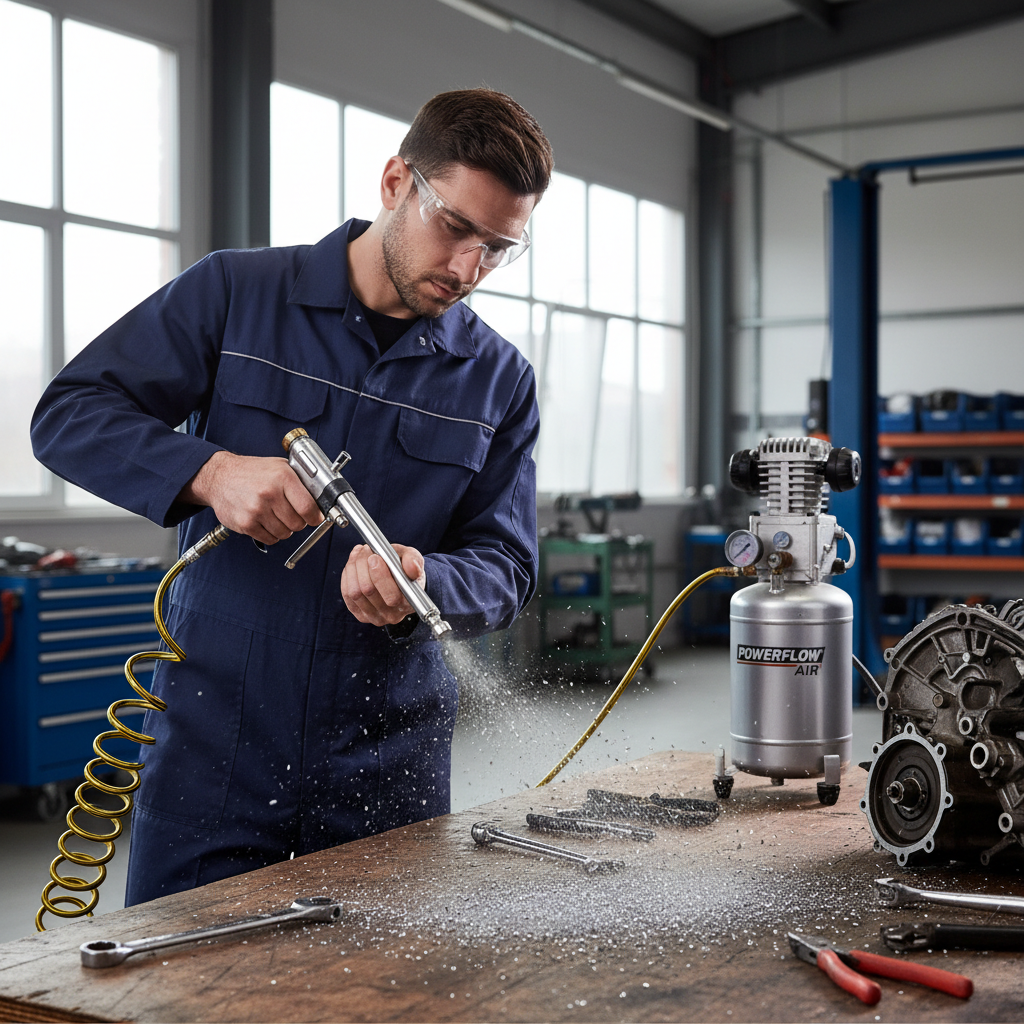
This guide focuses on how to choose, not on hype, because “best” depends on your compressor size, where you use it, and whether you need pinpoint control or raw volume. I’ll also flag the common mistakes that make a decent blow gun feel terrible.
What “best” means for an air blow gun in 2026
For most U.S. DIY garages and light shops, the best air blow gun is the one that hits a sweet spot: enough CFM to move debris, fine trigger control, and a safe tip that doesn’t turn compressed air into a hazard.
- Airflow vs control: High flow feels impressive, but without a progressive trigger it wastes air and makes precision cleaning annoying.
- Compressor match: A small pancake compressor can’t sustain a high-CFM venturi nozzle for long, you’ll get pressure drop and constant cycling.
- Ergonomics: Handle angle, trigger spring weight, and balance matter more than people expect, especially for longer sessions.
- Safety compliance: In industrial contexts, tip design and pressure at the nozzle can be regulated, and even at home it’s smart to follow conservative practices.
According to OSHA, compressed air used for cleaning must be reduced to 30 psi when used for cleaning purposes and used with effective chip guarding and PPE, and requirements can vary by situation. If you’re in a workplace, confirm your site policy before buying a “high output” nozzle that encourages unsafe habits.
Quick comparison table: features that actually change the experience
If you’re trying to narrow down options fast, this table covers the specs that usually separate a satisfying pick from a drawer-dweller.
| Feature | Why it matters | Good for | Watch-outs |
|---|---|---|---|
| Progressive trigger | Lets you feather airflow instead of full blast | Detail cleaning, electronics bays (carefully) | Cheap triggers can stick or feel gritty |
| Tip style (safety, rubber, venturi) | Affects noise, blowback, and effective force | General shop cleanup | Venturi tips can demand higher CFM |
| Inlet size (1/4" NPT common) | Determines compatibility and restriction | Most U.S. compressors | Adapters add restriction and leak points |
| Build material | Durability, feel in hand, resistance to drops | Daily use | All-metal can be cold/heavy, plastic can crack |
| Noise management | High-velocity jets scream, fatigue adds up | Indoor garages | “Quiet” tips may reduce peak force |
Why some blow guns feel weak (even when your compressor seems fine)
When people say a blow gun “doesn’t work,” the problem often sits somewhere else in the air system.
- Hose and fittings restrict flow: A long 1/4" hose, quick-connects, and a compact regulator can choke CFM. Pressure may look OK, but flow drops under use.
- Water in the line: Moisture adds sputter, makes dust stick, and can spray grime onto freshly cleaned parts. A simple filter helps.
- Regulator set too low: Some regulators sag under demand, so your gauge reads one thing until you pull the trigger.
- Nozzle mismatch: A high-output tip on a small compressor gives you a short burst, then a disappointing fade.
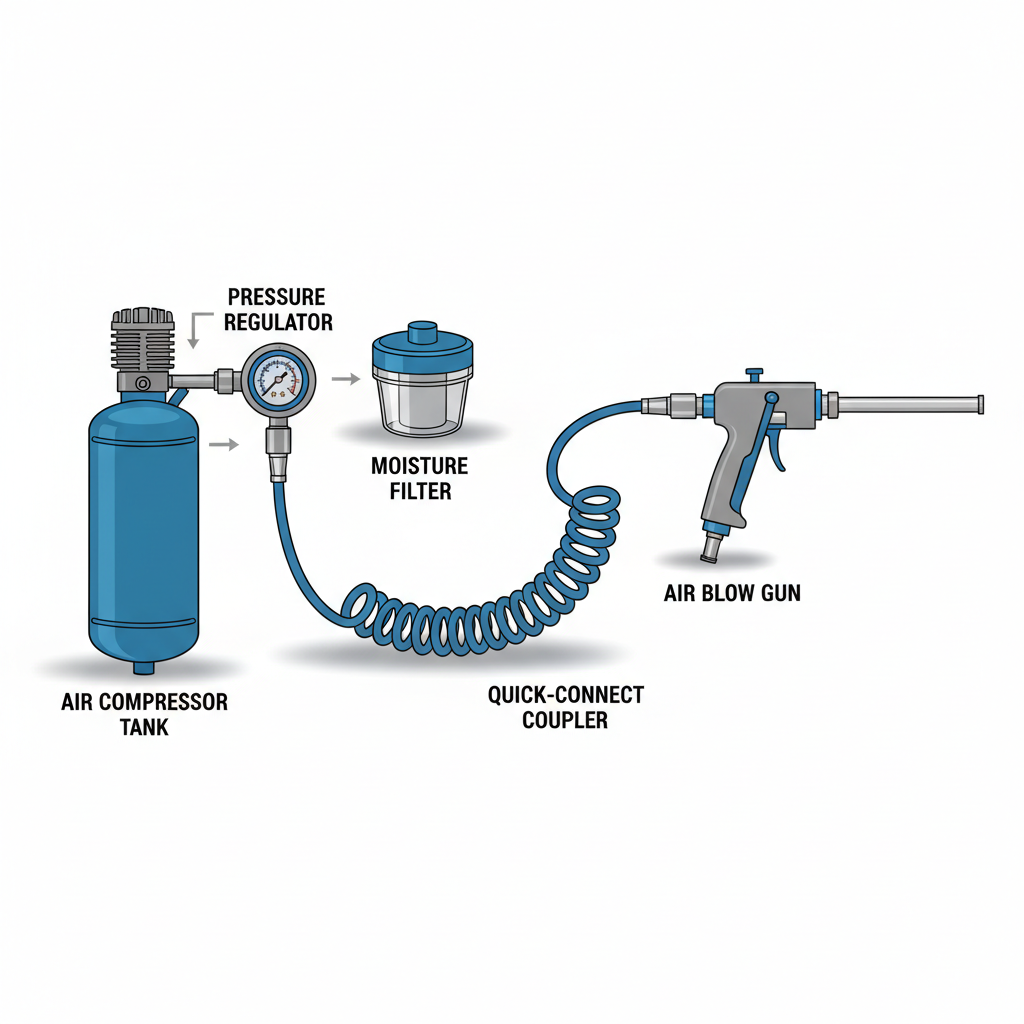
One practical trick: if your best air blow gun for air compressor hunt keeps landing on “more power,” take 2 minutes to check your couplers and hose size first. Many setups gain more real performance from fixing restrictions than from buying a louder nozzle.
A simple self-check list before you buy
Use this to classify your use case, it makes choosing a lot less random.
1) What are you cleaning most?
- Wood dust, light shop dust: prioritize control, quieter tips, and comfort.
- Metal chips, heavy debris: look for a durable body, longer reach, and strong chip deflection.
- Automotive bays: longer nozzle options help, but be cautious around sensors and connectors.
2) How big is your compressor in real terms?
- Small (pancake/portable): you’ll usually prefer a standard tip and good trigger feel.
- Mid-size garage compressor: you can use higher-flow tips, within reason.
- Shop setup with good CFM: specialty nozzles and longer lances start making sense.
3) Do you need precision or speed?
- Precision: progressive trigger, narrower tip, stable airflow.
- Speed: higher flow, venturi-style options, but expect higher air consumption.
How to choose the best air blow gun for air compressor: practical buying criteria
Specs are useful, but what you feel in your hand matters just as much. Here’s what tends to separate solid picks from gimmicks.
- Trigger modulation: Look for smooth travel that ramps airflow predictably. If you can only do “off/on,” you’ll waste air and overshoot debris.
- Tip options and replaceability: Tips get chewed up, especially around metal. Being able to swap tips is underrated.
- Comfort under repetition: A stiff trigger spring can annoy you fast if you do frequent blow-offs between tasks.
- Leak resistance: Cheap valves seep over time. If you hear a faint hiss, your compressor cycles more often.
- Noise and blowback: High-velocity tips can be harsh in enclosed garages, and they can throw chips back at you without guards.
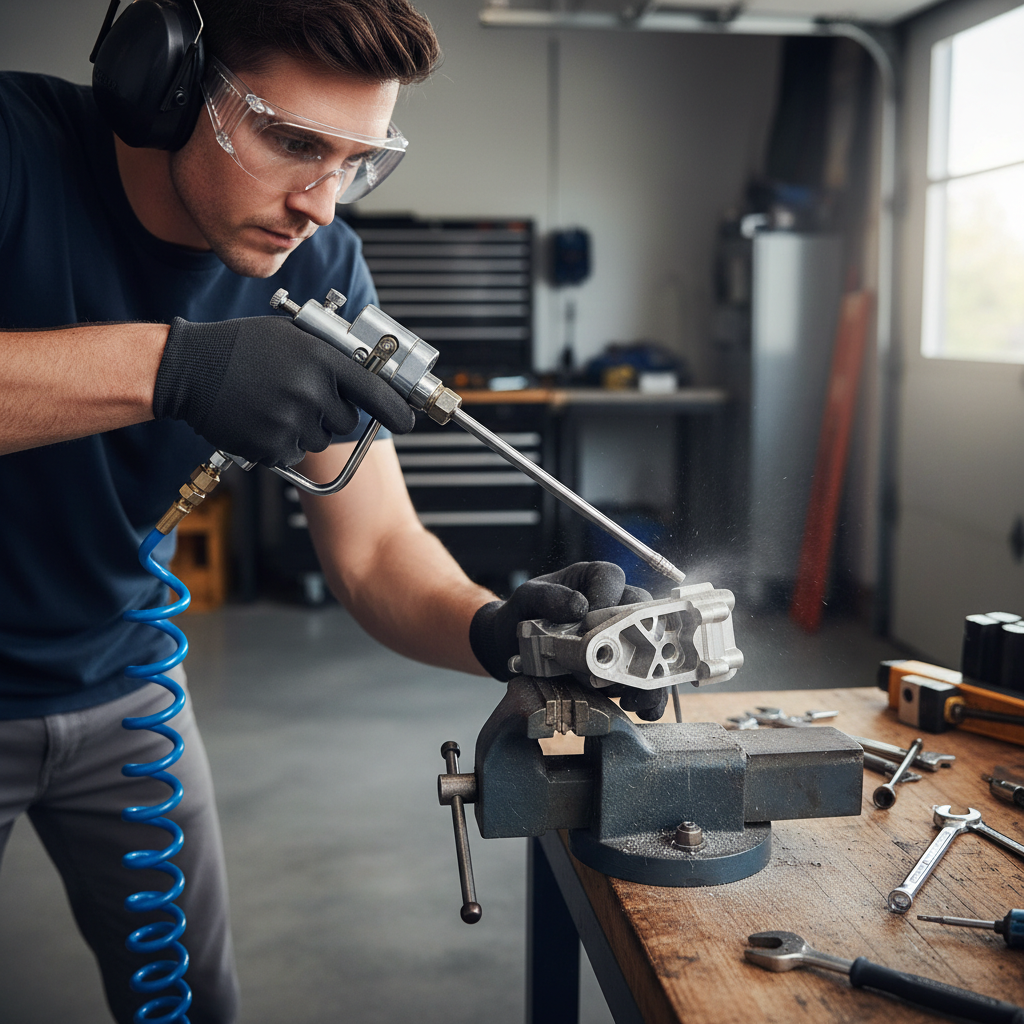
According to NIOSH, compressed air can create dangerous flying particles and noise exposure concerns, so eye protection and hearing protection are sensible defaults in many shop settings, and a quieter tip can be more than a comfort upgrade.
Setup and use tips that make almost any blow gun work better
You can buy a premium gun and still feel disappointed if the system around it is messy. These steps are the boring stuff that pays off.
Dial in the air system
- Set regulator thoughtfully: Don’t crank it just because you can. Start lower, increase until debris moves without turning into a sandstorm.
- Check couplers for restriction: High-flow couplers can help in some setups, but only if the rest of the line supports it.
- Add a filter/water separator: Many garages benefit from basic moisture control, especially in humid regions.
Use technique, not just pressure
- Angle the stream: Push debris away from sensitive areas instead of blasting straight down into cracks.
- Short bursts: Often clears better than holding full trigger, and it’s easier on compressor duty cycle.
- Mind what you’re atomizing: If you’re blowing brake dust, solvents, or unknown powders, it may be smarter to use a vacuum or wet method and consult a professional if exposure is a concern.
Mistakes to avoid (the stuff that wastes money)
A few patterns show up again and again when people shop for the best air blow gun for air compressor use, then feel let down.
- Chasing max PSI numbers: Most blow guns aren’t “better” because they claim a higher rating. Real-world feel comes from flow, trigger, and system restriction.
- Ignoring compressor CFM: If your compressor can’t support sustained flow, high-output tips become frustrating.
- Using the blow gun as a cleaning cure-all: Blowing can spread dust into the air, in some environments a vacuum with a filter is the safer call.
- Skipping PPE: Eye protection is non-negotiable for many tasks, and hearing protection is worth considering in smaller enclosed spaces.
- Overlooking reach: A short stubby nozzle feels fine until you try to clean behind a cabinet, under a lathe, or deep in an engine bay.
When it’s worth getting professional guidance
If you’re buying for a workplace, or you clean around hazardous dust, pressurized vessels, rotating machinery, or sensitive electronics, it’s worth asking an EHS lead, supervisor, or a qualified technician what’s acceptable. Regulations, site policies, and task risk vary, and the “best” choice may be the one that supports safer procedures rather than maximum force.
Also consider professional input if you’re trying to solve a repeated issue like moisture contamination, chronic pressure drop, or excessive compressor cycling, those problems often point to system sizing, piping, or maintenance rather than the blow gun itself.
Conclusion: a smart way to pick your 2026 blow gun
The best picks in 2026 tend to share the same DNA: a comfortable grip, a trigger you can feather, a tip that fits your cleaning style, and airflow that matches your compressor instead of fighting it.
If you want one simple next step, measure your hose size and check your couplers, then choose a blow gun with progressive control and a tip style suited to your debris type. If your setup is small, don’t feel pressured into a high-output nozzle, consistency usually beats drama.
Key takeaways
- Match nozzle style to compressor CFM, otherwise performance drops fast.
- Trigger feel matters as much as raw airflow for most cleaning tasks.
- Fix restrictions first (hose, couplers, regulator) before upgrading tools.
- Follow safe cleaning practices, especially around chips, dust, and noise.
FAQ
What tip style is best for general garage cleanup?
Many people do well with a standard or safety-style tip that balances airflow and control. Venturi-style tips can be satisfying, but they often consume more air, so your compressor size matters.
Will a “high output” blow gun work on a small pancake compressor?
It may feel strong for a short burst, then fade as pressure drops. If your compressor is small, a controllable standard tip often feels better across a full cleanup.
Is it OK to use an air blow gun to clean electronics?
It depends. Compressed air can push debris deeper or create static concerns, and high pressure can damage delicate parts. Many cases call for lower pressure, careful distance, and sometimes a different cleaning method.
How do I stop my blow gun from leaking at the fittings?
Check thread sealant, inspect the quick-connect for wear, and confirm the inlet threads match. If the valve itself leaks, replacement may be more practical than chasing tiny seals.
Why is my blow gun so loud compared to others?
Nozzle design drives noise. Narrow, high-velocity jets can be harsh, and enclosed spaces amplify it. A quieter safety tip may reduce the bite but can be easier to live with.
Do I need a pressure regulator at the blow gun?
A main regulator at the compressor often works, but an inline regulator near the tool can make control easier for mixed tasks. In workplaces, verify any pressure limits and guarding requirements.
What’s the most common reason debris blows back into my face?
Angle and distance. Blasting straight at a pile tends to ricochet chips upward, especially off hard surfaces. Lower the angle, use short bursts, and consider physical chip guards.
If you’re trying to choose the best air blow gun for air compressor use and you’re stuck between “more power” and “more control,” it often helps to list your debris type, compressor CFM, and hose size first, then shop for a gun that fits that reality rather than chasing the loudest nozzle on the shelf.