
The best hole punch tool for leather depends less on hype and more on what you punch most often: belts and straps, watch bands, handbags, or thick veg-tan for hardware.
If your holes come out oval, fuzzy, or off-center, it usually isn’t “bad leather,” it’s a mismatch between punch style, diameter, and how the leather is supported underneath. The right tool makes clean, repeatable holes and saves you from re-cutting straps or forcing rivets through a tight fit.
This guide focuses on what actually matters in 2026 buying decisions: punch type, comfort, hole accuracy, maintenance, and how different leathers behave. You’ll get a quick self-check, a practical comparison table, and step-by-step setup so your first holes look like your tenth.
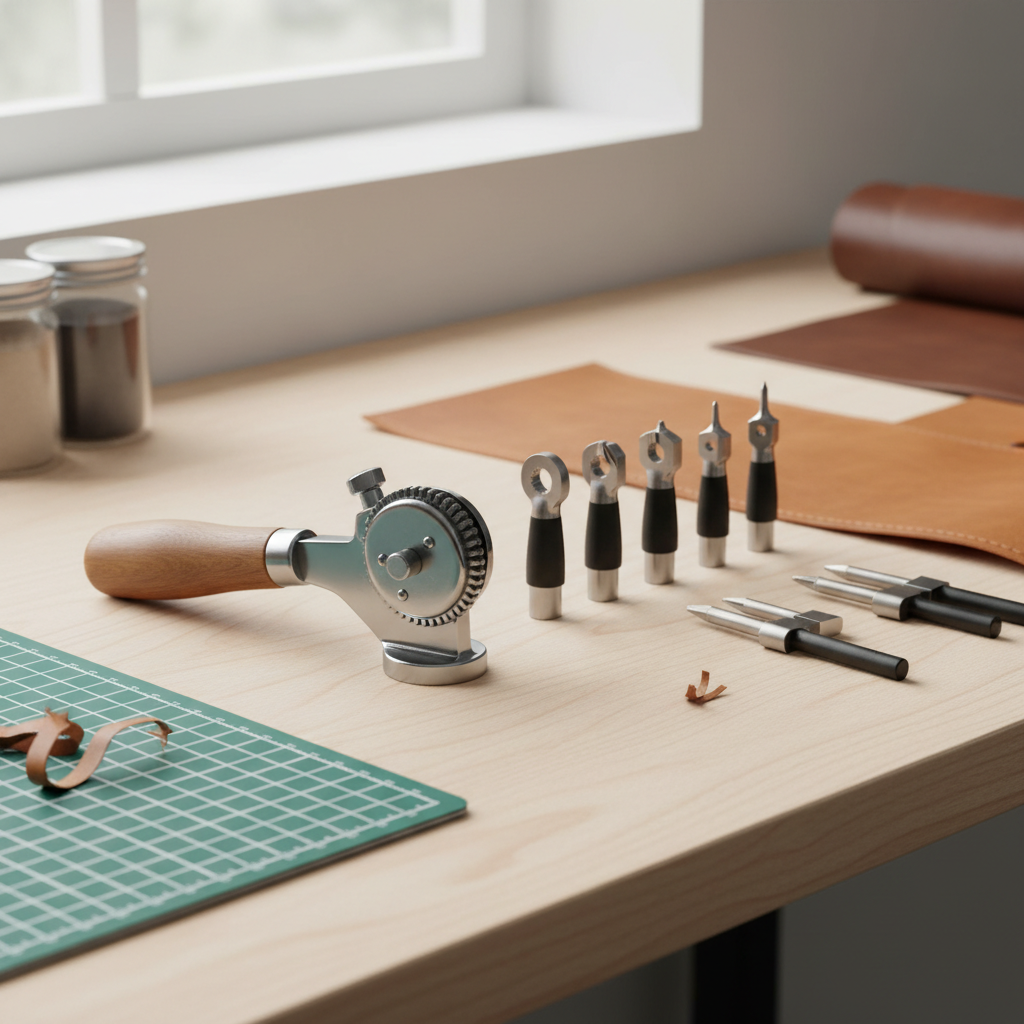
What “best” means for a leather hole punch (and what it doesn’t)
“Best” usually means one of two things: the cleanest hole with the least effort, or the most convenient tool for quick work. Those don’t always overlap.
- Clean cut: A sharp, properly supported punch shears fibers instead of tearing them, so edges look crisp and hardware seats flat.
- Repeatability: Holes land where you mark them, the diameter stays consistent, and the tool doesn’t wander when you strike or squeeze.
- Ergonomics: If you punch more than a few holes at a time, handle comfort and leverage matter more than most people expect.
- Maintenance reality: Any punch can feel “premium” when new, but a tool you can sharpen, strop, and keep aligned wins long term.
What “best” doesn’t mean: the most expensive tool, or the one with the most hole sizes. Extra sizes are nice, but good alignment and sharpness usually beat a bloated feature list.
Types of leather hole punches, with real-world pros and cons
Most shoppers compare a rotary punch against individual drive punches, but there are a few more options worth knowing because they solve different problems.
Rotary (revolving) hole punch
A rotary punch is fast for belts, collars, and light-to-medium leather because it’s a squeeze tool with multiple tube sizes on a wheel.
- Best for: quick sizing holes, straps, light veg-tan, chrome-tan, occasional projects
- Watch for: frame flex, wheel wobble, and dull tubes that crush instead of cut
Drive punches (individual round punches)
Drive punches are the go-to for clean holes in thicker leather because you strike them with a mallet, and each punch is dedicated to one diameter.
- Best for: thick veg-tan, stacked leather, precise hardware holes, cleaner edges
- Watch for: needing a solid surface, proper striking technique, and a safe cutting pad
Plier-style punch (single size or small set)
Plier punches can work well when you need access in tight areas, but some models struggle with thick leather because the jaws don’t stay perfectly parallel.
- Best for: on-the-go repairs, awkward placements, light leather
- Watch for: jaw misalignment and “half-moon” cuts from uneven pressure
Pricking irons and stitching chisels (not true hole punches)
These create stitch spacing holes or slits, not round hardware holes. They’re excellent for hand stitching layouts, but they won’t replace a round punch for rivets or snaps.
According to The Leather Working Group (LWG)..., leather types and finishes vary widely, so tools that work cleanly on one hide may need adjustment on another. Translation: expect some testing on scraps even with a great punch.
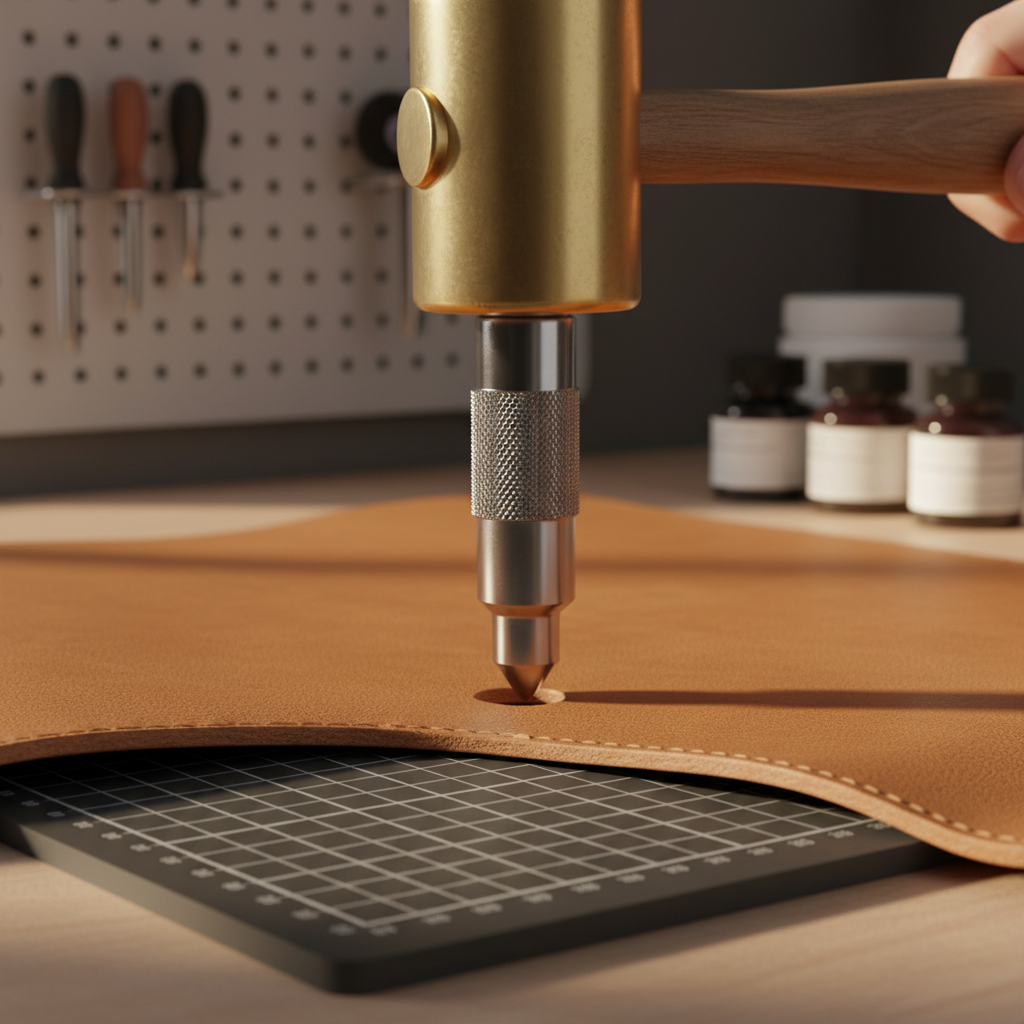
Quick self-check: which punch style fits your projects?
If you want the fastest way to pick the best hole punch tool for leather, match the tool to your most common job, not your “someday” project.
- I mostly punch belt sizing holes (1–10 holes at a time): rotary punch, plus one drive punch in your most-used size
- I install snaps/rivets/grommets regularly: drive punches for the exact hardware diameters
- I work with 8–12 oz veg-tan (or stacked layers): drive punches, heavier mallet, dense pad
- I make watch straps and small goods: smaller drive punches (1–3 mm), good marking tools
- I hate hand fatigue: avoid stiff rotary frames, consider better leverage tools or move to drive punches
If you’re split between quick strap work and occasional thick leather, many people end up owning both: rotary for convenience, drive punches for “I need this to look perfect.”
Comparison table: what to buy in 2026 (by use case)
Use this as a decision grid. It’s not about brands here, it’s about the tool category and the features that tend to matter.
| Use case | Recommended tool | Why it works | What to check before buying |
|---|---|---|---|
| Belts, dog collars, strap sizing | Rotary punch | Fast multi-size punching without swapping tools | Wheel play, tube sharpness, frame stiffness |
| Snaps, rivets, Chicago screws | Drive punches (matched sizes) | Cleaner holes and more consistent diameter | Steel quality, straight walls, easy sharpening |
| Thick veg-tan, stacked leather | Drive punches + heavy mallet | Controlled force, less crushing | Proper striking surface, punch length, edge bevel |
| Mobile repairs, tight access areas | Plier punch | Access where a rotary frame won’t fit | Jaw alignment, replaceable dies, leverage |
| Hand stitching layout (not hardware) | Pricking irons / stitching chisels | Even stitch spacing and clean stitch holes | Tooth polish, spacing standard, straightness |
How to get cleaner holes (even with a “good” punch)
A lot of frustration comes from setup, not the tool. Here’s the workflow that usually prevents ragged edges and off-center holes.
1) Mark, then confirm spacing
- Use a wing divider, ruler, or strap end template, then press a light indentation with an awl.
- Before you punch, hold the hardware up to the mark. If it looks slightly off now, it will look very off later.
2) Use the right backing surface
- Best: end-grain punching board or dense poly punching pad
- Avoid: bare concrete, metal, or a surface that rebounds hard, it can mushroom the punch edge
3) Reduce tear-out
- For softer chrome-tan, place a scrap piece underneath, it supports fibers and often makes the exit side cleaner.
- For thick veg-tan, one firm strike beats several light taps that let the punch walk.
4) Keep the punch sharp (yes, even rotary tubes)
If you have to squeeze harder every month, that’s usually dullness. Many punches can be touched up with fine sandpaper, a sharpening cone, or stropping compound, but the method depends on the tool geometry. If you’re unsure, check the manufacturer’s guidance or ask a leatherworking supplier, because aggressive sharpening can change diameter.
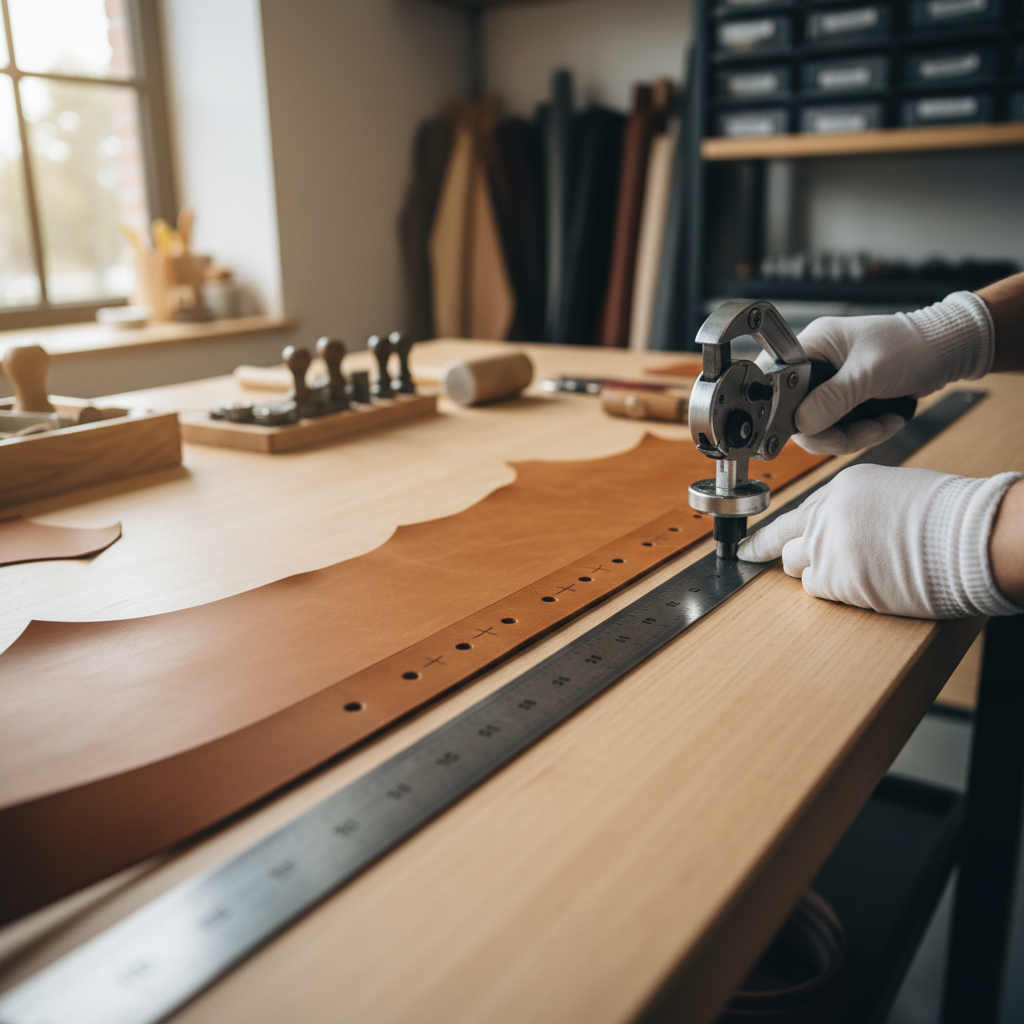
Common mistakes that make even expensive tools feel bad
This is the part people don’t want to hear, because it sounds small, but it’s usually the difference between “why is this tearing” and “wow, that looks factory.”
- Punching too close to an edge: leather can split, especially dry veg-tan. Leave more margin for high-stress holes.
- Wrong hole size for hardware: forcing a rivet post through a tight hole can deform the leather and tilt the cap.
- Twisting the punch to “help it”: twisting can oval out the hole and burnish the edge unevenly.
- Using a worn cutting surface: a chewed-up pad can deflect the punch, and your hole lands slightly off.
- Expecting one tool to cover everything: a rotary punch that feels great on 6 oz leather may struggle on 12 oz, that’s normal.
If you’re chasing perfect alignment, consider adding a simple hole guide jig for belts and straps. It’s not fancy, it just removes the “eyeballing” part that causes most crooked runs.
Buying checklist: features worth paying for
In 2026, most tool categories look similar online, so it helps to filter by a few practical signals.
- Hardened steel and clean machining: smoother inner walls usually mean less tearing and easier plug ejection.
- Replaceable tubes or serviceable parts: on rotary punches, replaceable tubes can extend life and keep cuts crisp.
- Comfortable handles and good leverage: if you feel strain in your hand after two holes, it won’t get better mid-project.
- Common size coverage: many leatherworkers live in a small range, often around 2 mm to 6 mm, plus whatever your hardware requires.
- Availability of matching accessories: mallet, pad, and hardware setters matter more than people budget for.
Key takeaway: for many shops, the “best” setup is a midrange rotary punch for fast strap work plus a short set of drive punches in the sizes you actually use.
When to step up, or ask for help
If you’re producing items for sale, or you’re working with thick leather and hardware that must sit perfectly, it can be worth getting guidance from a leather supply shop or an experienced maker. A small sizing mismatch between punch and hardware causes a lot of rejects.
For safety, treat striking tools seriously. If you see chips, cracks, or mushrooming on a punch head, stop using it and consider replacing it. Eye protection is a reasonable precaution, and if you’re unsure about tool condition, a professional tool supplier can usually advise.
Conclusion: the best pick for most people in 2026
For most US hobbyists and small makers, the best hole punch tool for leather in 2026 ends up being a two-part answer: a solid rotary punch for everyday strap holes, and a few sharp drive punches for clean, hardware-specific work. That combination covers speed and finish quality without forcing one tool to do jobs it’s not built for.
If you want a simple next step, list the hardware sizes you use, buy punches that match those diameters, then upgrade convenience with a rotary tool once your basics feel consistent.