
Magnetic telescoping pickup rod is one of those tools you don’t think about until a screw drops behind an engine, a washer disappears under a cabinet, or a bit rolls into a tight corner where your fingers will never fit.
When it works, it feels like cheating, quick retrieval, less disassembly, fewer scraped knuckles. When it doesn’t, you waste time fishing around, the magnet won’t hold, or the rod flexes exactly when you need control.
This guide breaks down what actually matters when buying and using a telescoping magnetic pickup tool, how to match specs to real jobs, and a few habits that keep you from turning a simple pickup into a “now it’s stuck” situation.
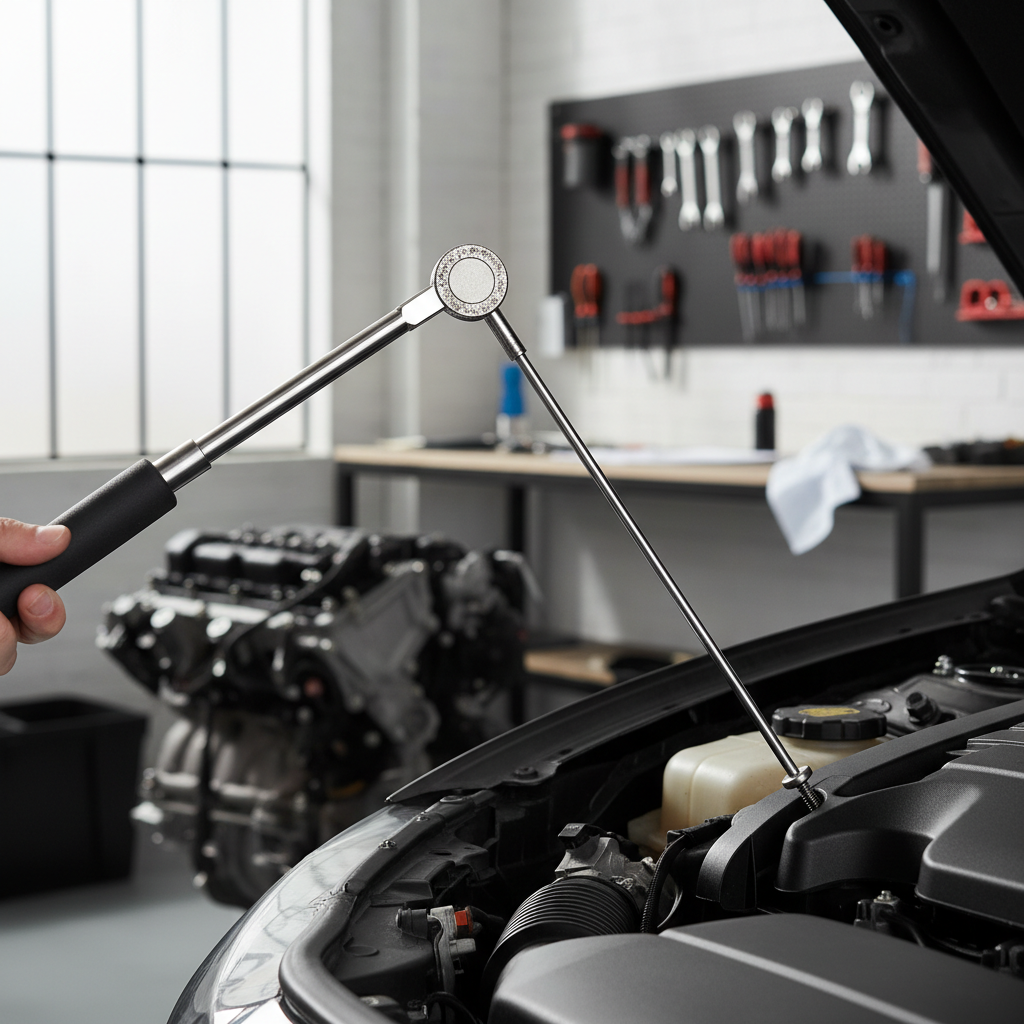
Why this tool saves time (and when it doesn’t)
Most people buy a pickup tool after losing something in a spot that’s annoying to reach, under appliances, inside HVAC ducts, around car subframes, or behind server racks. The big win is avoiding teardown just to recover a $0.10 fastener.
But reality has limits. A magnetic pickup works only if the item is ferrous, it needs enough contact area to hold, and the approach angle matters more than most specs sheets admit. If you’re trying to pick up stainless hardware, aluminum chips, brass fittings, or something wedged under tension, a magnet may disappoint.
According to OSHA, good housekeeping and control of loose metal objects help reduce slip, trip, and equipment hazards in many workplaces, and retrieval tools can support that goal when used safely around machinery and electrical equipment.
How a magnetic telescoping pickup rod is built
Most models are simple: a telescoping steel shaft, a magnet head, and a grip. The “simple” part hides meaningful differences that affect control and reliability.
Key parts that change performance
- Magnet type: many tools use neodymium magnets for higher pull in a compact head, older or budget versions may use ferrite and feel weaker.
- Head shape: a small head fits tighter spaces, a wider head usually grabs better and resists twisting off-center.
- Shaft rigidity: a longer reach is nice until the rod flexes and the head “walks” away from the part.
- Telescoping lock or friction: better tools hold extension length without collapsing when you tap or lift.
- Handle ergonomics: a grippy handle matters when you’re reaching overhead or your hands are oily.
If you only remember one thing, remember this: the best pickup rod is the one that fits the access path and holds steady, not the one with the biggest number on the package.
Buying checklist: what to look at before you click “Add to Cart”
Specs can be confusing because brands report pull force in different ways, and many don’t explain the test conditions. Use the checklist below as a practical filter.
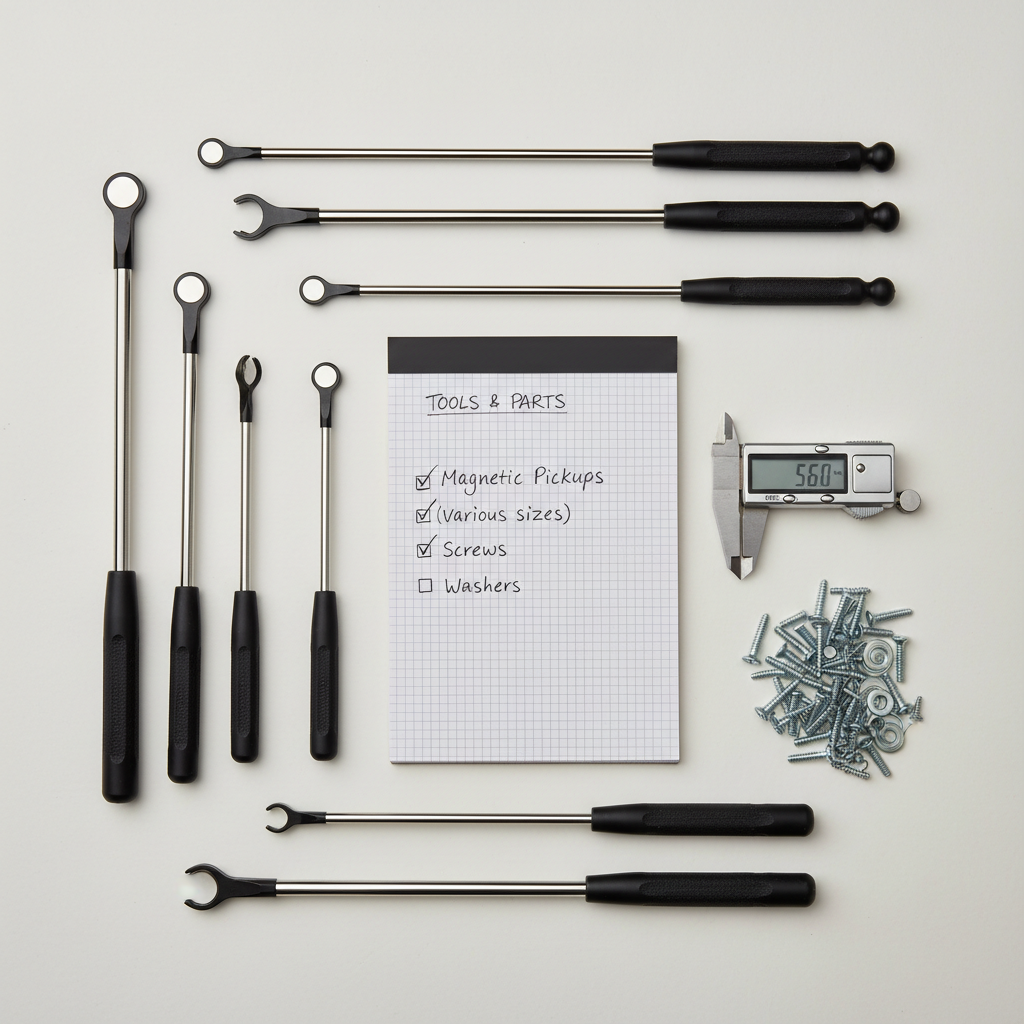
Quick buying checklist
- Minimum and maximum length: minimum matters for toolboxes and tight approach angles, maximum matters for floor drops and deep cavities.
- Magnet diameter: small head for crevices, larger head for better hold on larger bolts.
- Claimed pull strength: treat it as “relative,” especially if you’ll grab oily parts or uneven surfaces.
- Shaft stiffness: if you plan to reach 20–30 inches often, prioritize rigidity over extreme extension.
- Corrosion resistance: plated shafts and sealed heads hold up better in humid garages and service vans.
- Extras: pocket clip, non-slip grip, or a protective cap for the magnet head can be more useful than it sounds.
Common use cases and what to prioritize
| Use case | What matters most | What to avoid |
|---|---|---|
| Auto/engine bay fasteners | Small head, decent pull, rigid shaft | Overly flexible long rods |
| Shop floor hardware pickup | Long reach, stronger magnet, quick deploy | Short max length, tiny head |
| Cabinet/appliance gaps | Thin profile, controlled extension | Bulky head that can’t fit |
| Electronics/PC work | Smaller magnet, precision control | Very strong magnets near sensitive media |
| HVAC and duct areas | Reach, corrosion resistance | Rust-prone shafts |
Self-test: do you need a stronger magnet, or a better approach?
People often blame “weak magnet,” but the real issue is usually contact and angle. Before replacing your tool, run this quick check.
- Is the part actually magnetic? Many stainless steels are weakly magnetic or non-magnetic, and aluminum/brass won’t respond at all.
- Is there enough flat contact? A rounded bolt head touched at an edge can slip even with a strong magnet.
- Is there oil, dust, or paint? A thin film can reduce holding power and make the part slide.
- Is the rod flexing? Flex makes it hard to “seat” the magnet on the part, especially at full extension.
- Are you fighting gravity and vibration? Overhead pickups and shaky footing amplify tiny slips.
If you answered “yes” to contact, contamination, or flex, a different technique may fix the problem faster than buying a new magnetic telescoping pickup rod.
Practical techniques that make pickups feel effortless
The difference between “this thing never works” and “why didn’t I buy this earlier” is usually how you approach the part.
Step-by-step: retrieving a dropped screw without making it worse
- Stop moving the area: pause fans, belts, or anything vibrating if possible and safe, small movement can walk the fastener deeper.
- Reduce extension first: start with a shorter length for better control, extend only when you need reach.
- Use a gentle “seat”: touch the magnet to a broad surface of the part, then apply slight pressure to increase contact.
- Lift slowly: keep the rod aligned with the pull direction, avoid sideways torque that peels the part off.
- Hand off carefully: once the part clears the tight area, guide it to your free hand or a tray, don’t whip it out.
If the item is stuck under an edge
Try sliding the magnet head in from the side and “roll” the fastener free, instead of lifting straight up. A small head helps here, but patience helps more.
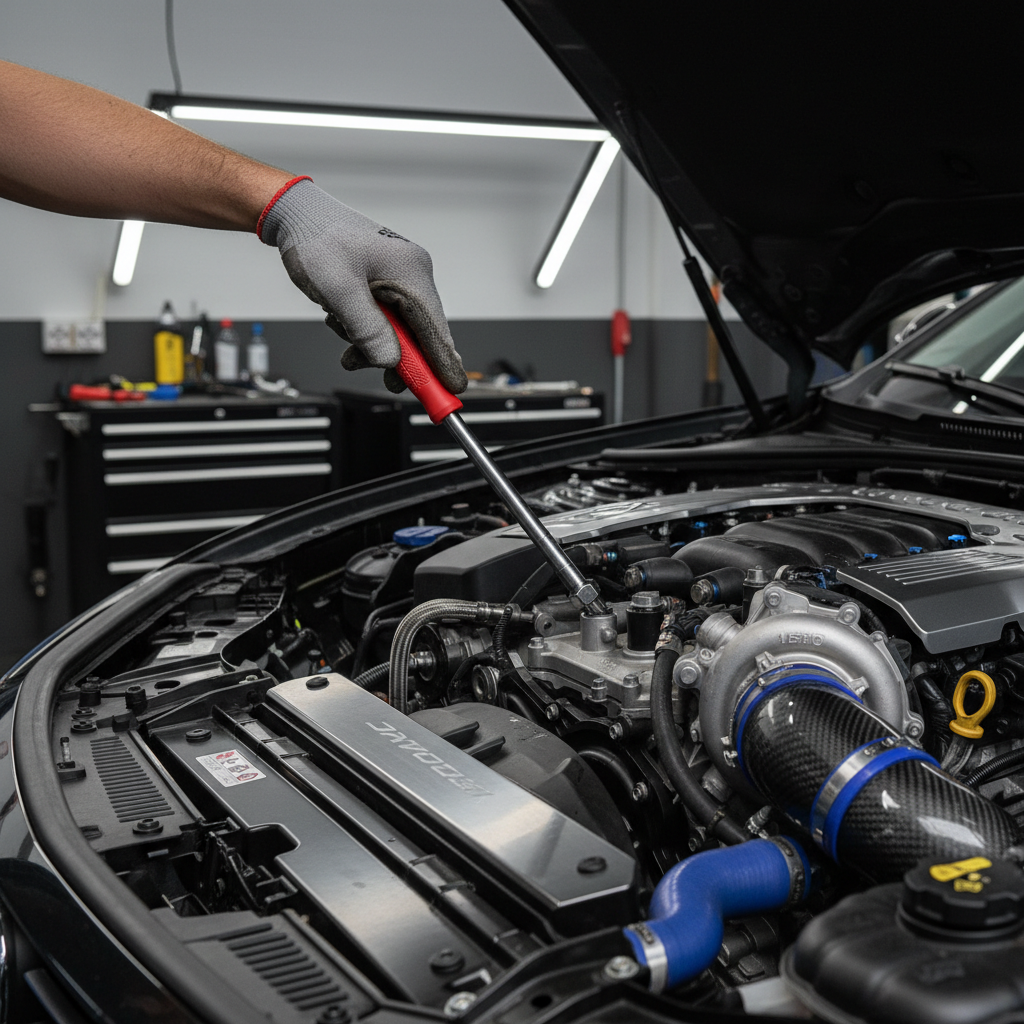
Safety and common mistakes (especially around electronics and machinery)
Magnets feel harmless, but there are a few scenarios where you should slow down. A pickup tool can also snag sharp edges you can’t see, and that’s where cuts happen.
What to be careful about
- Moving machinery: if you’re working near belts, fans, or rotating shafts, consider shutting equipment down and following site lockout/tagout practices where applicable. According to OSHA, controlling hazardous energy is a core safety practice in many industrial settings.
- Electronics and media: many modern devices are fairly resilient, but strong magnets near sensitive components or magnetic storage can be risky, when in doubt, keep distance and check manufacturer guidance.
- Pinch and snap: a stronger magnet can snap onto steel suddenly, keep fingers clear when retrieving from tight gaps.
- Magnet attracts debris: metal shavings cling to the head, wipe it clean so you don’t scratch painted surfaces or contaminate assemblies.
Misconceptions that waste time
- “Stronger is always better”: too much pull can make precise placement harder, and it can increase pinch risk.
- “Longer reach solves everything”: at max extension many rods wobble, control beats reach in cramped spaces.
- “It should pick up anything metallic”: plenty of common metals won’t respond to magnets, so have a backup grabber or claw tool.
Care, storage, and small upgrades that extend tool life
A magnetic telescoping pickup rod usually fails in boring ways: gritty telescoping sections, rust, or a magnet face that gets chipped. A little maintenance keeps it smooth.
- Wipe after dirty jobs: especially if you pick up filings, those particles act like sand in the telescoping joints.
- Light oil on the shaft: a tiny amount can help in humid environments, avoid overdoing it if you work near clean assemblies.
- Add a simple cap: if yours didn’t come with one, a protective cover can reduce chipping when it bangs around a toolbox.
- Keep a small parts tray nearby: the fastest retrieval is still slow if the screw falls again, give it a landing spot.
Key takeaways and a realistic “best choice” mindset
For most people, the right tool is a mid-length, reasonably rigid pickup with a head small enough for common gaps and strong enough for typical screws and bolts. If your work is mostly automotive or appliance repair, prioritize control and fit. If you’re doing facility maintenance and floor pickups, reach and pull become more important.
Key points to remember: match the head size to the access path, don’t judge strength claims too literally, and treat technique as part of the tool. If you do those three, a pickup rod becomes a quiet time-saver instead of another gadget in the drawer.
If you want a next step, do this: measure the tightest gap you usually work in, then choose a magnet head that fits comfortably, and pick the shortest max extension that still reaches your typical drop zones.
FAQ
What is a magnetic telescoping pickup rod used for?
It’s mainly for retrieving ferrous parts like screws, nuts, and small tools from tight or hard-to-reach spaces, common in automotive bays, cabinets, HVAC areas, and general maintenance.
How strong should the magnet be for picking up bolts?
It depends on bolt size, surface contact, and whether the bolt is oily or painted. In many cases, a moderate magnet with good contact holds better than a “super strong” magnet that’s hard to position precisely.
Why won’t my pickup tool grab stainless steel?
Many stainless alloys are weakly magnetic or not magnetic at all. If you frequently handle stainless fasteners, a mechanical claw grabber can be a more reliable backup.
Can a telescoping magnetic pickup rod damage electronics?
It can be a concern in certain situations, especially with very strong magnets and close proximity to sensitive components or magnetic media. When you’re unsure, keep distance and follow device manufacturer guidance.
What length is most practical for home and garage use?
For many garages, a tool that collapses short for storage but extends enough to reach under vehicles or appliances is the sweet spot. Too long can feel floppy in tight engine compartments.
How do I clean metal shavings off the magnet head?
Wipe with a shop towel and consider using tape to lift fine filings. Avoid dragging the head across painted surfaces until it’s clean, those tiny shards can scratch.
Is a flexible pickup tool better than a rigid telescoping rod?
Flexible shafts can snake around obstacles, but they’re harder to “seat” onto the fastener. If your access path is straight, a rigid telescoping rod usually feels more controllable.
If you’re trying to build a small “retrieval kit” for a car, shop, or service bag, pairing a pickup rod with a small claw grabber and a magnetic parts tray is often the more frustration-proof setup, you’re covered when magnetism isn’t an option or the angle is awkward.