
Needle file set small craft kits are supposed to make detail work easier, yet many people end up with rounded edges, chatter marks, or files that clog after a few passes. The good news is most of that comes down to a mismatch between file shape, cut, and the material you’re actually working on.
If you’re buying a small file set for miniatures, jewelry, model kits, 3D prints, or light metal deburring, you’re not really shopping for “more pieces.” You’re shopping for control: the right profiles, a predictable bite, and a handle that lets you steer without over-filing.
This guide breaks down what matters in a small craft needle file set, how to judge quality fast, and how to use it in a way that leaves crisp lines instead of “oops, that corner is gone.”
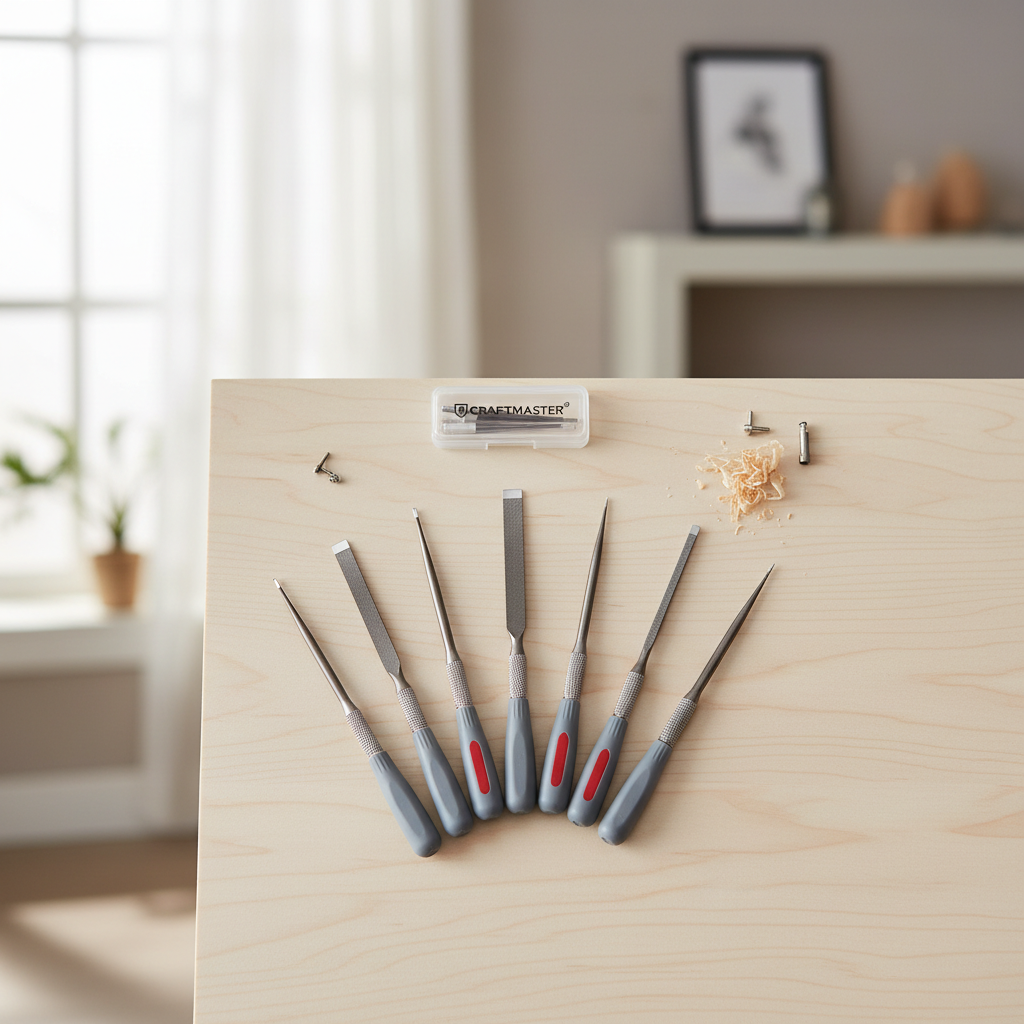
What a “small craft needle file set” is really for
Needle files are small, precision hand files used to shape and refine tight areas where sandpaper, rotary bits, or larger files feel clumsy. Think slot cleanup, seam removal on plastic kits, dialing in a notch on brass, or squaring a corner inside a tiny cutout.
A needle file set small craft users love usually has two traits: it cuts predictably and it doesn’t force you into awkward angles. That’s why the handle and the file “profile” (shape) often matter more than the total count.
Common projects where needle files shine
- Plastic models and miniatures: sprue marks, mold lines, tight recesses
- 3D prints: support nubs, elephant’s foot cleanup, small fit adjustments
- Jewelry and wire work: refining bezels, smoothing prongs, deburring
- Light metal tasks: aluminum/brass deburring, small slots and keyways
- Wood crafts: shaping tiny joints or inlays where rasps are too aggressive
They’re less ideal for heavy stock removal. If you’re trying to remove a lot of material fast, you’ll usually do better starting with a larger file, a rasp, or sanding, then switching to needle files for the last 10–20%.
Why some sets disappoint (and how to spot the cause)
Most frustrations trace back to three realities: coarse cuts sold as “precision,” soft steel that dulls early, or choosing the wrong file for the geometry. You can still get good results, but you need to recognize what’s happening.
Typical pain points
- Clogging (pinning): plastic, soft aluminum, or resin packs into the teeth and starts skating.
- Chatter marks: too much pressure, too coarse a cut, or filing on a surface that flexes.
- Rounded corners: using a file face that’s too wide, or rocking the file while stroking.
- Early dulling: softer steel, poor heat treatment, or using the same file on very different materials.
- Rusting in storage: bare carbon steel plus humidity, common in budget sets.
According to OSHA, hand tools should be maintained and kept in good condition to reduce injury risk, and files specifically should be used with handles to protect the hand from the tang. That safety detail also affects precision: a proper handle gives you steadier control.
Choosing the right shapes: fewer tools, more control
If you only remember one buying tip, make it this: the “best” set is the one that includes the profiles you actually reach for. For most hobbyists, 6–10 useful shapes beat a 20-piece set full of duplicates.
The core shapes and what they do well
- Flat: leveling edges, smoothing faces, squaring outside corners
- Half-round: concave curves and gentle radii; one tool covers two surfaces
- Round: holes, arcs, inside curves (watch for over-enlarging)
- Triangle (three-square): V-grooves, inside corners, sharpening lines
- Square: slots, keyways, inside right angles
- Knife/feather: tight notches, acute angles, getting into narrow seams
Many needle file set small craft kits include a “warding” file (thin, flat) that’s great for narrow slots. If you work on model kits and 3D prints, that one gets used a lot.
Cut, grit, and finish: what “fine” really means
Needle files usually describe aggressiveness by “cut” (like bastard/second/fine) rather than sandpaper grit, and labeling varies by brand. If you do delicate work, you typically want a finer cut so each stroke removes less material and leaves a smoother finish.
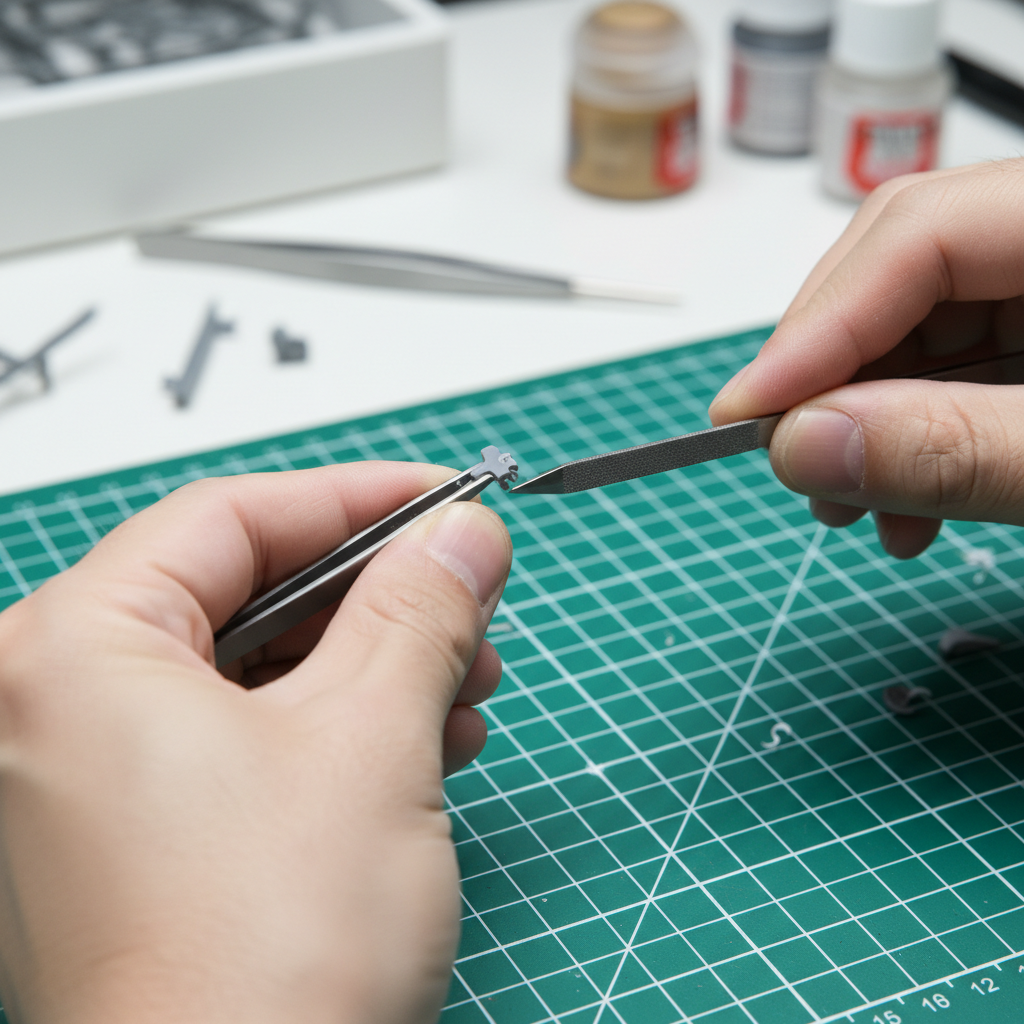
A practical way to think about it
- Coarser cut: faster shaping, more visible scratches, easier to overdo
- Finer cut: slower, cleaner surfaces, easier to “sneak up” on a fit
If you’re tuning fitment (parts that must slide or snap together), a finer cut saves time overall because you spend less effort hiding deep scratches later.
Quick comparison table for common materials
| Material | What tends to go wrong | What usually works better |
|---|---|---|
| PLA/ABS (3D prints) | Clogging, gouging | Fine cut, light pressure, clean file often |
| Resin prints | Chipping edges | Fine cut, short strokes, back up the part |
| Brass/aluminum | Pinning, chatter | Medium-to-fine cut, consistent angle, chalk helps sometimes |
| Steel (light work) | Slow cutting, dulling cheap files | Quality hardened file, don’t use your “plastic file” on steel |
| Wood | Fuzzy grain, tear-out | Fine cut, follow grain, finish with sanding |
Self-check: which set do you actually need?
Before you buy, it helps to be honest about the work you do most weeks, not the one “someday” project. Use this checklist to narrow it down quickly.
5-minute buying checklist
- You mostly do plastic/resin: prioritize fine cut, comfortable handle, easy-to-clean teeth.
- You mostly do metal fit-up: look for hardened steel, consistent tooth pattern, and less flex in the file.
- You need inside corners: triangle and square are non-negotiable.
- You work in tight recesses: knife/warding profile matters more than extra duplicates.
- You hate scratches: go finer, plan a follow-up with sanding sticks or micro-mesh.
If your current set feels “grabby,” you might not need a whole new kit. Sometimes adding one finer file in your most-used shape changes everything.
How to use needle files for clean detail (without over-filing)
Good results come from restraint. The file does the cutting; your job is to guide it and stop early. This is where many people rush, then try to “fix” an overcut corner that can’t come back.
Simple technique that stays accurate
- Lock the part down: clamp, vise, or even double-sided tape on a block to prevent flex.
- Pick a reference face: decide which surface must stay true, then file toward it carefully.
- Use light, even strokes: pressure often causes chatter and uneven removal.
- Count strokes: two strokes, check, repeat. This feels slow, but it prevents mistakes.
- Keep the file flat: avoid rocking, especially on outside corners.
Cleaning the file so it keeps cutting
- Plastic/resin: a soft brass brush or a stiff nylon brush usually clears teeth without damaging them.
- Metal: a file card (wire brush) helps, and some people use chalk to reduce pinning, results vary by alloy and cut.
According to OSHA, using a file without a handle can lead to hand injuries from the tang. Even if you’re careful, a slipped stroke can happen, so a handle is a small upgrade with a real safety payoff.
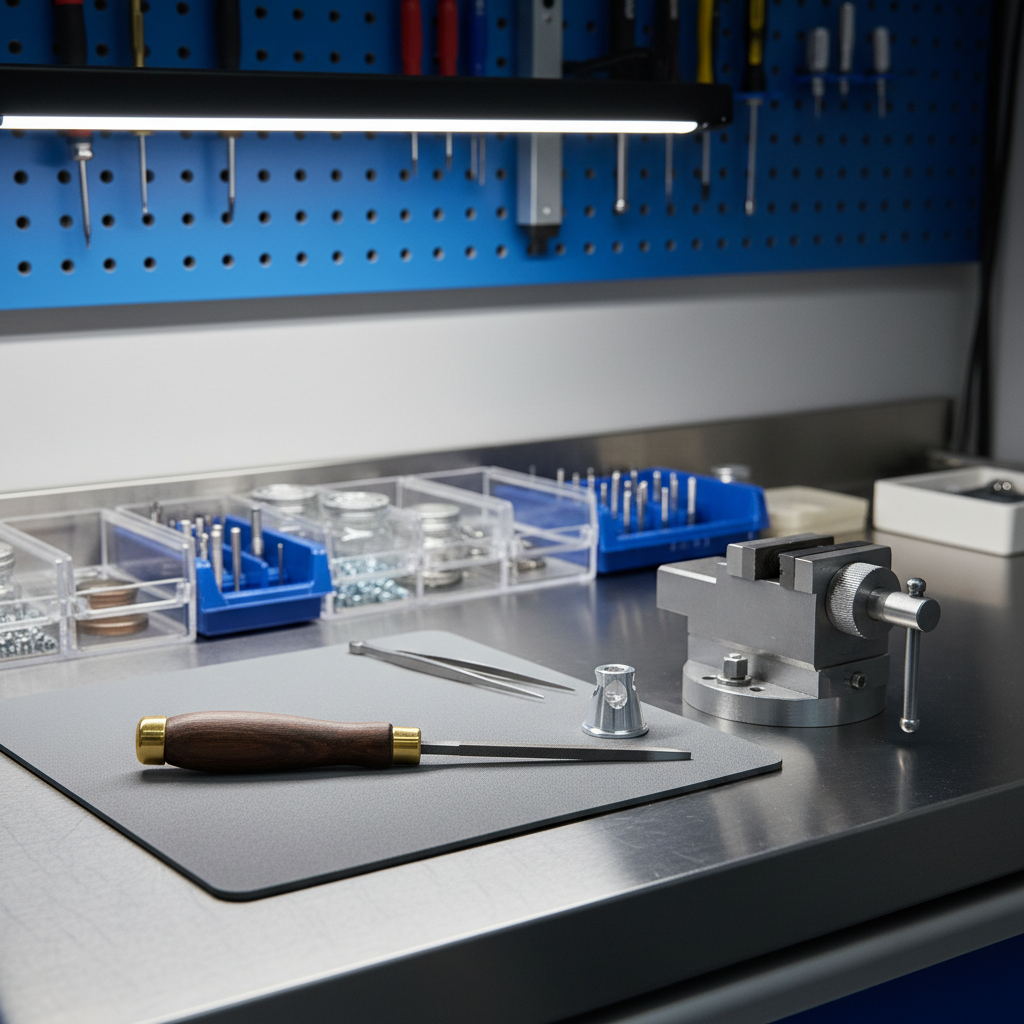
Mistakes that waste time (and how to avoid them)
Some errors don’t look like errors until you try to assemble parts or apply paint, then you see the scratches, the uneven edges, or the loosened fit. These are the big ones.
- Using one file for everything: cross-contamination is real; a file that has chewed steel will feel rough on plastic.
- Over-indexing on “more pieces”: extra shapes don’t help if the steel is soft or the cut is too coarse.
- Skipping finishing steps: files leave a texture; sanding sticks or fine abrasive paper often make the final surface look intentional.
- Filing freehand in mid-air: the part flexes, your stroke arcs, and corners round.
- Trying to fix a misfit in one go: especially with snap fits, remove tiny amounts, test frequently.
Key takeaway: If a needle file set small craft task keeps going wrong, slow the stroke rate, reduce pressure, and check fit more often than feels necessary.
When it’s worth getting extra help or switching tools
If you’re working on a high-value piece (a customer’s jewelry, a rare kit, a precision part) and you’re not confident about how much material you can remove, it may be smart to ask a more experienced maker, a jeweler, or a machinist for guidance. Tiny mistakes add up quickly in tight tolerance work.
Also consider switching tools when the situation calls for it: sanding sticks for broad surfaces, ceramic stones for a smoother finish, or a rotary tool for rough removal followed by hand filing for control. If dust is involved, especially from resin or metal, wearing appropriate respiratory protection is commonly recommended, and you can consult a professional if you’re unsure what’s appropriate for your workspace.
Conclusion: a small set can do pro-level detail if it matches your work
A needle file set small craft setup doesn’t need to be fancy, it needs to be predictable. Choose shapes you’ll actually use, lean toward finer cuts for detail, add a proper handle, and treat “two strokes then check” as your default rhythm.
If you want one action to take today, clean your most-used file and practice on scrap for five minutes, you’ll immediately feel the difference between pushing harder and guiding better.
FAQ
- What’s the best needle file shape for tight inside corners?
Triangle and square files cover most inside-corner work. Triangle helps sharpen V-grooves and corners; square is better for true right angles in slots. - Can I use the same needle files on plastic and metal?
You can, but many people regret it. Using one file on steel then on plastic often leaves rougher scratches and makes control harder, so separating “plastic files” and “metal files” is a practical habit. - Why does my file keep clogging on PLA or resin?
That’s usually pinning, where material packs into the teeth. Lighter pressure, a finer cut, and frequent brushing help, and keeping the part steady reduces heat and smearing. - Do I need a handle on a needle file?
It’s strongly recommended. A handle improves control and reduces the chance your hand contacts the tang if the file slips. According to OSHA, handles are part of safe file use. - What should I do after filing to get a smoother finish?
Plan on sanding. For plastics, sanding sticks or fine wet/dry paper often removes file marks quickly; for metal, finer abrasives or polishing compounds may be more appropriate depending on the finish you want. - How do I know if a needle file set is too coarse for detail work?
If one or two strokes leave deep grooves you can see immediately, it’s likely too aggressive for finishing. Coarse sets can still be useful for shaping, but you’ll want a finer option for final passes. - Are diamond needle files better than steel needle files?
Diamond files can work well on very hard materials or for controlled abrasion, but they feel different and can load up on plastics too. For general hobby detail, many users keep both types for different tasks.
If you’re trying to pick a small craft needle file set for a specific material or project and you want a quicker shortlist, it usually helps to describe what you’re filing (PLA, resin, brass, steel) and the kind of features you’re shaping, then you can match cut and shapes without buying a huge kit you won’t use.