
thread seal tape plumber questions usually show up right after an annoying drip, a new faucet install, or a quick DIY repair that “should have worked” but didn’t.
The good news is thread seal tape can be extremely reliable, but only when it matches the fitting type and you wrap it the right way. Most leaks I see people fight with come from a small mismatch: the wrong tape, the wrong direction, or using it on threads that were never meant to seal with tape in the first place.
This guide breaks down what matters in real-world plumbing, how to pick tape by color and application, and a simple wrap method that holds up under pressure without making the joint impossible to service later.
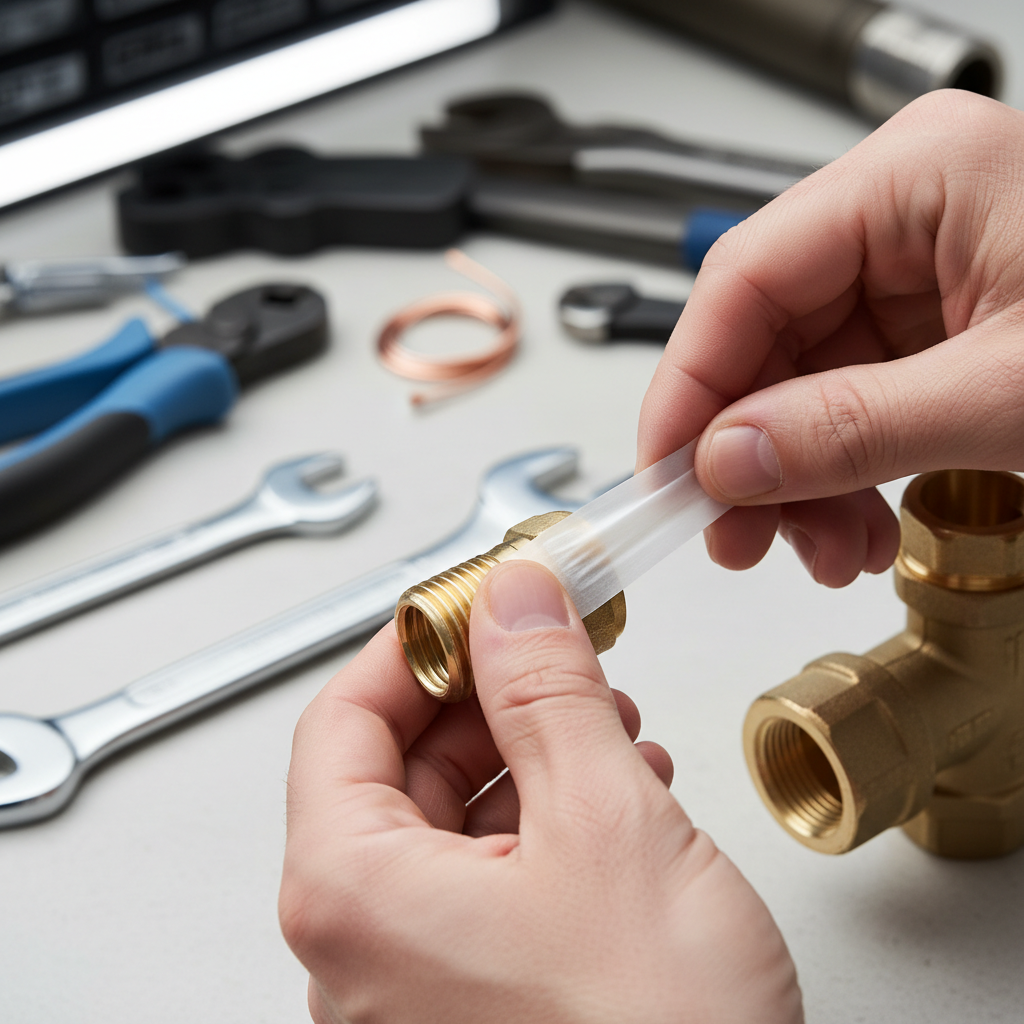
What thread seal tape actually does (and what it doesn’t)
Thread seal tape is usually PTFE tape. It helps seal the tiny spiral gaps in tapered pipe threads, and it also reduces friction so threads seat more smoothly.
Two important boundaries keep you out of trouble:
- It’s for threaded joints, not compression fittings, flare fittings, or gasketed connections that seal somewhere else.
- It won’t “fix” bad threads that are cross-threaded, cracked, heavily corroded, or out-of-spec.
According to ASPE (American Society of Plumbing Engineers), correct joint preparation and using materials compatible with the piping system are central to reliable sealing, which is a fancy way of saying the tape is only one piece of the puzzle.
When plumbers use tape vs pipe dope (and when they use both)
People often treat tape and pipe dope as interchangeable. In practice, they’re different tools, and the “right” choice depends on material, temperature, and what you’re connecting.
Here’s a practical comparison you can use on a job site or under a sink.
Quick comparison table
| Option | Where it shines | Common drawbacks |
|---|---|---|
| PTFE thread seal tape | Clean installs, easy disassembly, many NPT joints | Can shred if wrapped wrong, not ideal on some plastics if over-tightened |
| Pipe dope (thread sealant paste) | Vibration resistance, slightly imperfect threads, some gas-rated formulas | Messier, cure time varies by product, compatibility matters |
| Tape + dope | Tough joints, extra margin on critical connections | Easy to overdo, can increase risk of over-tightening if you’re not careful |
If your goal is a clean, serviceable joint, tape alone often works. If you’re dealing with older threads or a connection that gets bumped, paste can be more forgiving. And yes, many pros combine them, but that’s not a license to crank fittings until they squeal.
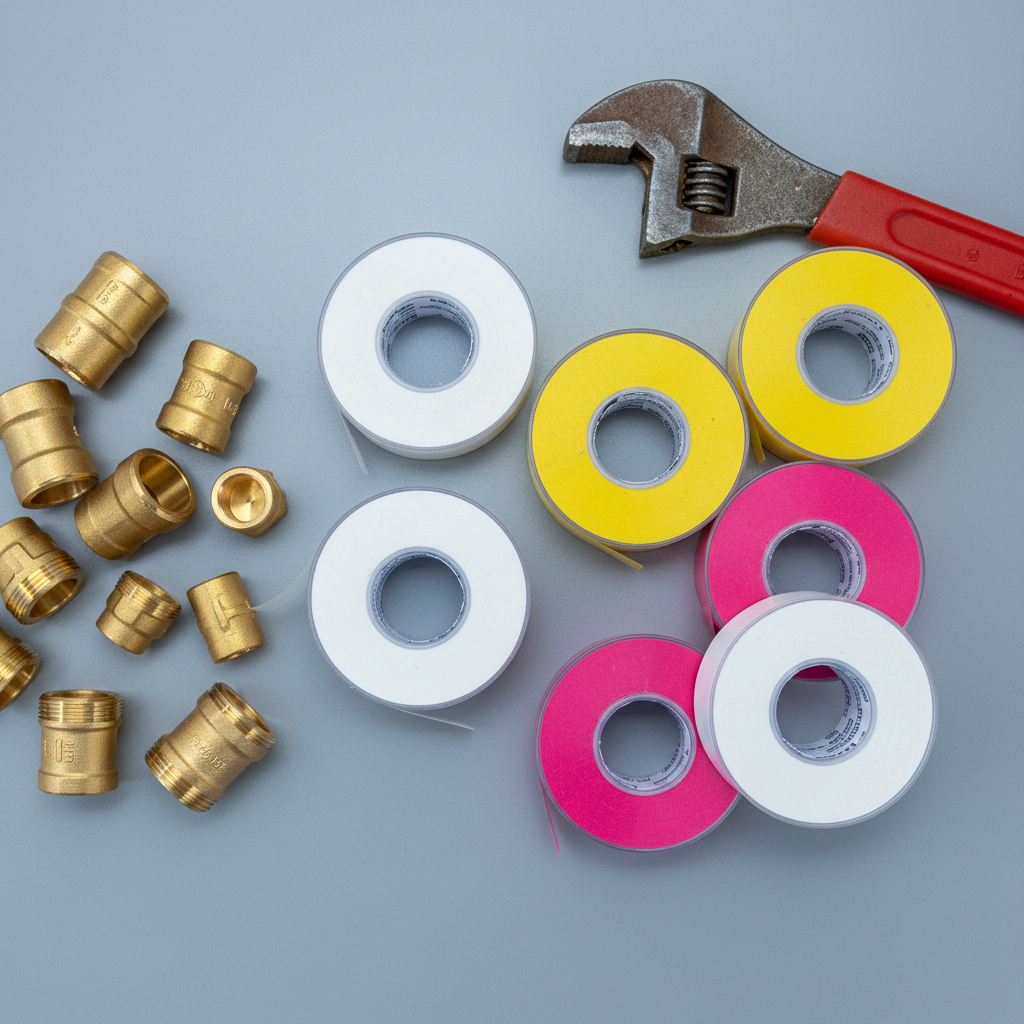
Choosing the right thread seal tape: color, thickness, and material fit
At the store, tape color can feel like marketing. It’s not purely decoration, but it also isn’t a universal standard across every brand. Treat color as a strong hint, then confirm what the label says the tape is rated for.
- White PTFE tape: common general-purpose tape for many water-line threaded joints.
- Yellow PTFE tape: often labeled for gas lines. Use only products clearly rated for gas service and allowed by local code.
- Pink (or thicker “heavy-duty” tape): typically thicker, helpful when threads are a bit looser or you want fewer wraps.
Material compatibility matters too. Metal NPT threads tend to be forgiving. Plastic threaded fittings can crack if you over-tighten, especially when tape reduces friction and lets you turn “just a bit more” without feeling resistance.
If you’re unsure whether your connection is NPT (tapered) or something else, pause. Many plumbing leaks come from taping threads that don’t seal on the threads.
Self-check: are you even supposed to tape this fitting?
Before you reach for thread seal tape, use this quick checklist. It saves time and prevents the “I fixed it three times” loop.
- NPT / tapered pipe threads? Tape usually makes sense here.
- Compression fitting (nut + ferrule)? Don’t tape the threads, the seal happens at the ferrule.
- Flare fitting (cone-shaped metal-to-metal seal)? Don’t tape; you can interfere with the sealing surface.
- Union with gasket/O-ring? Don’t tape unless instructions say otherwise.
- Flexible supply line to a faucet/toilet? Many seal with a rubber washer, not thread tape.
According to IAPMO guidance used across many plumbing code and product certification contexts, fittings must be installed per manufacturer instructions and intended sealing method. When instructions say “no sealant,” take that seriously.
How to wrap thread seal tape plumber-style (simple steps that prevent most leaks)
thread seal tape plumber results come down to two details: direction and tension. If either is off, the tape bunches up, shreds, or unwinds while you tighten.
Step-by-step wrap method
- Clean the male threads with a rag. Remove grit, old paste, or loose tape.
- Start one thread back from the end so tape doesn’t bunch inside the pipe.
- Wrap in the tightening direction. For standard right-hand threads, that’s clockwise when you face the pipe end.
- Keep tension so tape seats into the thread grooves rather than floating on top.
- Use 2–4 wraps for most common water joints, more only if the tape is thin or threads are loose. If you’re at 8–10 wraps, something else may be wrong.
- Press it down lightly with your fingers to conform it to the threads.
- Thread by hand first to avoid cross-threading, then tighten with a wrench to snug plus a bit more, not “as hard as possible.”
Key point: if the tape frays into strings while tightening, unwrap and restart. Those strings can keep the joint from seating and sometimes end up inside valves or aerators.
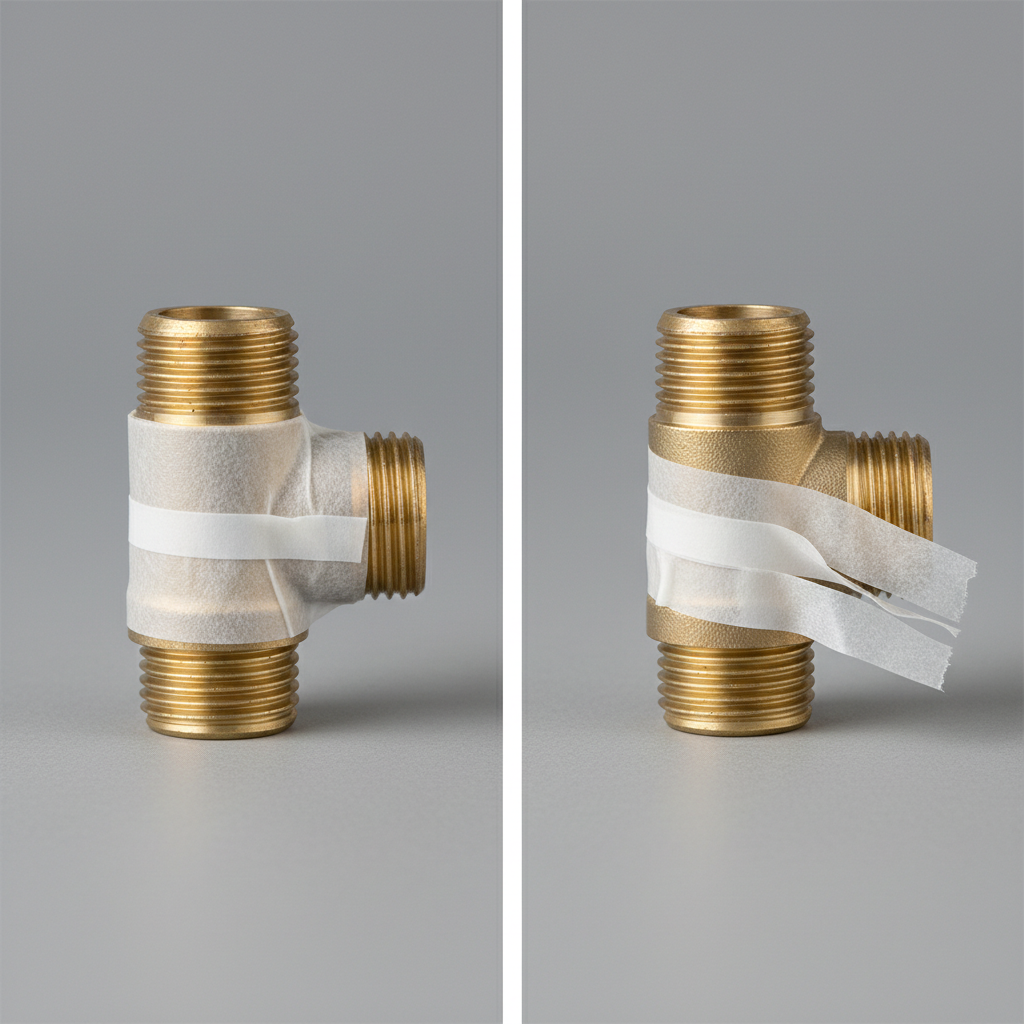
Common mistakes that create “mystery leaks”
Leaks after using tape often look like bad luck, but they’re usually predictable. These are the repeat offenders.
- Wrapping the wrong direction, so the tape loosens as you tighten.
- Taping the first thread, which can push tape into the pipe and prevent full seating.
- Using tape on non-thread-sealing fittings like compression or flare connections.
- Over-tightening plastic fittings, cracking them or distorting threads.
- Mixing incompatible sealants. Some pastes aren’t intended for certain plastics or chemicals; check the label.
- Trying to “add tape” without disassembly. If it leaks, take it apart, clean it, and redo the wrap.
If you keep tightening to chase a drip, stop and reassess. A joint that needs brute force often has damaged threads, misalignment, or the wrong adapter.
Practical troubleshooting: what to do when it still leaks
When a taped joint drips, you want a repeatable process, not guesswork.
A fast fix workflow
- Confirm the leak location: wipe dry, then watch where the first moisture appears. It’s easy to blame the thread when it’s actually above it.
- Disassemble and inspect: look for cross-threading, cracks, or flattened threads.
- Match the fitting type: if it’s a compression/flare/gasket seal, remove tape and assemble per spec.
- Re-tape with the right wrap count: aim for a neat, tight wrap that doesn’t overbuild the diameter.
- Support the pipes while tightening: twisting a fixed pipe can stress joints elsewhere and create new leaks.
If you suspect the connection is for gas, don’t improvise. Use products rated for that service, test per local requirements, and consider calling a licensed plumber if you’re not fully confident.
Key takeaways before you buy your next roll
- thread seal tape plumber success is mostly about using it on the right joint type and wrapping clockwise with tension.
- Color helps, but the label and rating matter more than the color.
- Tape is not a patch for damaged threads or the wrong adapter.
- When in doubt, redo the joint cleanly instead of stacking more wraps.
If you want one simple action today, make it this: take the joint apart, clean the threads, and rewrap carefully. That step fixes more “leak-proof tape didn’t work” complaints than any special trick.
FAQ
How many wraps of thread seal tape should I use on NPT threads?
Most common water-line NPT joints do well with about 2–4 wraps, assuming standard thickness tape and decent threads. If it needs far more, the threads may be mismatched or worn.
Should thread seal tape go on male or female threads?
Put it on the male threads. Wrapping the female side tends to bunch tape and makes it harder to control where it ends up.
Can I use thread seal tape on plastic fittings?
Often yes, but be cautious: tape reduces friction, which can make over-tightening more likely. Many plastic fittings do better with fewer wraps and careful tightening, and some manufacturers prefer a specific paste instead.
What’s the difference between white and yellow PTFE tape?
Yellow tape is commonly marketed for gas applications, while white is usually general-purpose for water. Don’t rely on color alone; confirm the product is rated for your application and allowed by local code.
Why does my tape shred when I tighten the fitting?
It’s usually low tension wrapping, wrapping in the wrong direction, or rough/damaged threads. Remove everything, smooth/clean the threads, then rewrap tightly in the tightening direction.
Is pipe dope better than tape for stopping leaks?
Not always. Paste can fill imperfections and handle vibration well, while tape stays cleaner and disassembles easily. Many plumbers choose based on the specific joint, material, and access for future service.
Can I use tape and pipe dope together?
In many cases it works fine, but it also increases lubrication, which can lead to over-tightening. If you combine them, use a modest amount of each and stop if the joint starts feeling “too easy” to tighten.
If you’re chasing repeat leaks, working on older threads, or just want a more foolproof setup, it may be worth asking a plumber which tape grade or sealant matches your exact fittings, a quick photo of the connection usually saves a lot of trial-and-error.