
how to use a pole saw safely from ground comes down to three things: controlling the saw, controlling the branch, and controlling where your body stands while both move.
If you’ve ever watched a limb “look light” and then swing, split, or drop faster than expected, you already know why this matters, pole saw accidents are rarely dramatic at the start, they’re small misjudgments that stack up. A clean cut is nice, but the real goal is finishing the job without a trip to urgent care or a smashed fence panel.
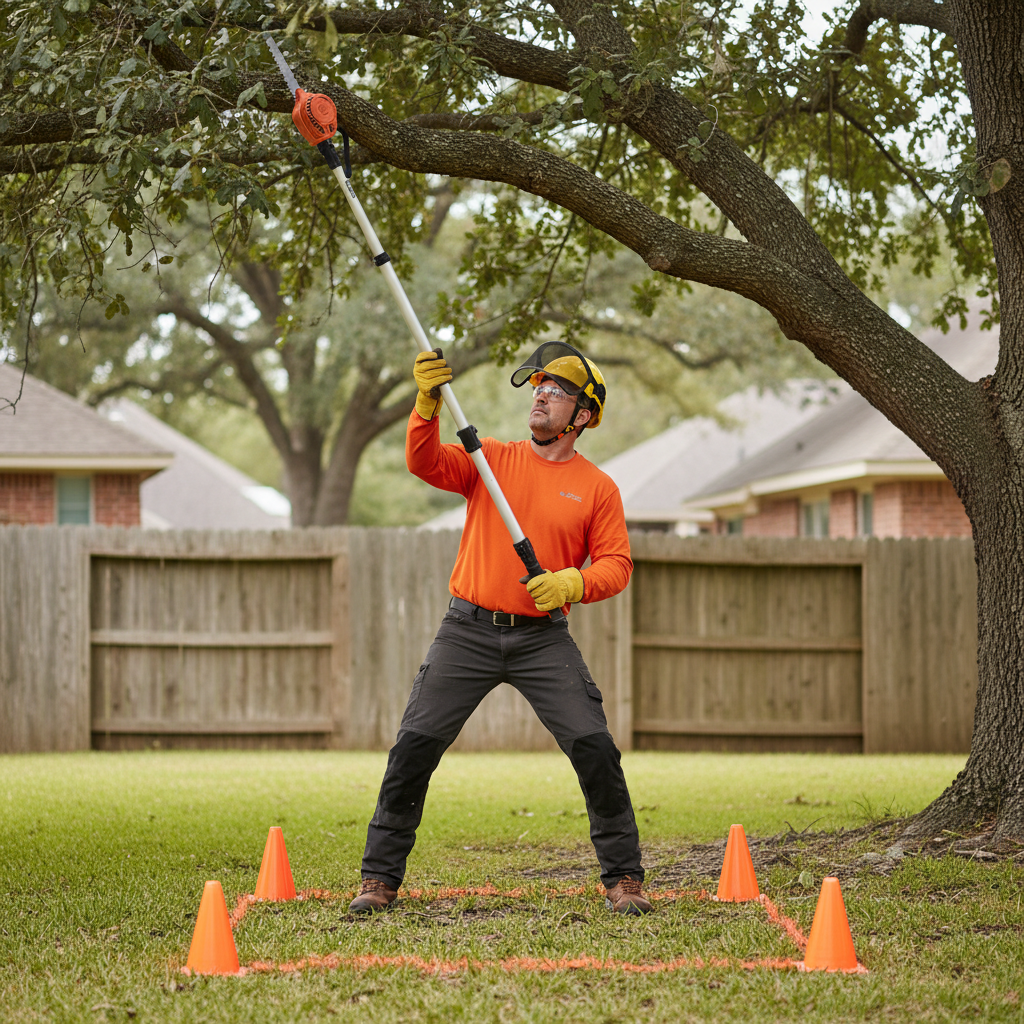
This guide stays practical: what to check before you start, where people usually slip up, and how to cut so the branch does what you expect. You’ll also see a quick table for typical scenarios, because the “right” method changes a lot depending on limb size, height, and what’s underneath.
Start with the real risks (so you don’t fight the wrong problem)
A pole saw feels safer than a ladder because you stay on the ground, but you’re still working under a falling load while holding a long lever that can bounce, twist, or snag.
- Falling branches: even small limbs can break windows, dent cars, or knock you off balance.
- Kickback and pinch: the bar tip catching wood can jerk the pole, especially on awkward angles.
- Loss of balance and fatigue: long reach plus overhead work burns your shoulders fast, tired arms make bad cuts.
- Electrical contact: power lines are the hard stop, a pole saw can bridge distance you thought was “safe.”
- Debris to face and eyes: sawdust and bark rain straight down.
According to OSHA, contact with energized power lines is a major cause of serious injury and death in tree work, if there’s any chance you’re near overhead lines, the safer call is to bring in a qualified tree professional.
A quick “should I do this from the ground?” decision checklist
Before you even fuel up or charge a battery, run this simple test. If you answer “no” to any of the first three, pause and rethink the plan.
- Clear drop zone? You can keep people, pets, and breakables out of the landing area.
- Stable footing? Flat ground, no slick leaves, no uneven rocks, no steep slope.
- Branch size makes sense? Many homeowners do fine with smaller limbs, thicker wood often needs rigging, planning, and experience.
- No power lines anywhere close? If lines are in the same visual “work area,” stop and get advice from a pro.
- Body position stays out of the drop path? You can stand to the side, not directly under the cut.
If you’re unsure on branch size, treat that uncertainty as a warning sign, it’s usually cheaper to hire help than to fix a roof, fence, or shoulder.
Gear and setup that actually prevent accidents
Most “safe use” advice sounds obvious, but the details are what save you. Here’s the setup that tends to matter in real yards.
PPE that’s worth wearing
- Eye protection at minimum, a face shield is even better for falling chips.
- Hearing protection for gas or loud electric models.
- Gloves for grip and minor cuts, avoid bulky ones that reduce control.
- Work boots with traction, not running shoes.
- Helmet is smart when cutting overhead, especially in dense canopies.
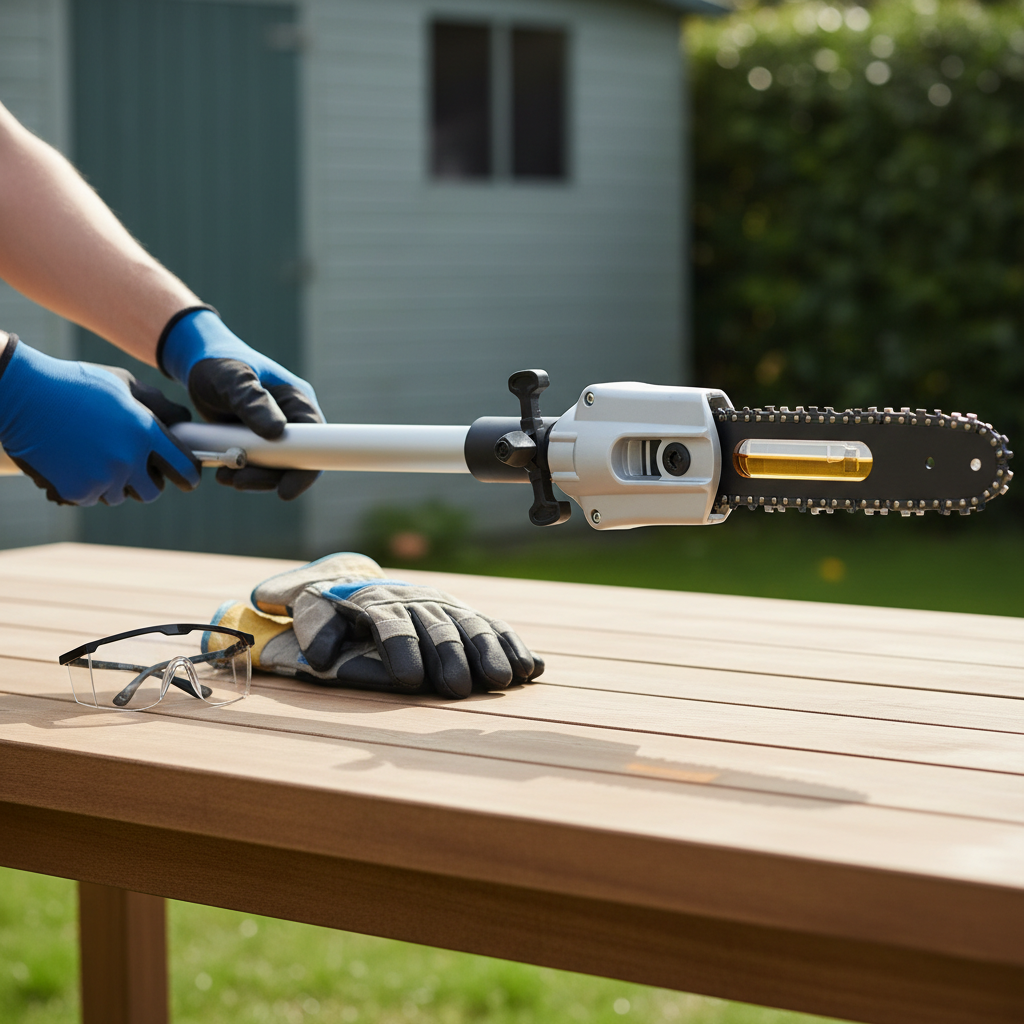
Tool checks (two minutes, big payoff)
- Chain sharp and properly tensioned, a dull chain invites pushing, and pushing invites slipping.
- Bar oil filled and oiling works, many problems start with a dry bar.
- Battery seated or fuel cap tight, and controls operate smoothly.
- Pole locks tight with no twist, a little play becomes a lot at full extension.
Work zone setup
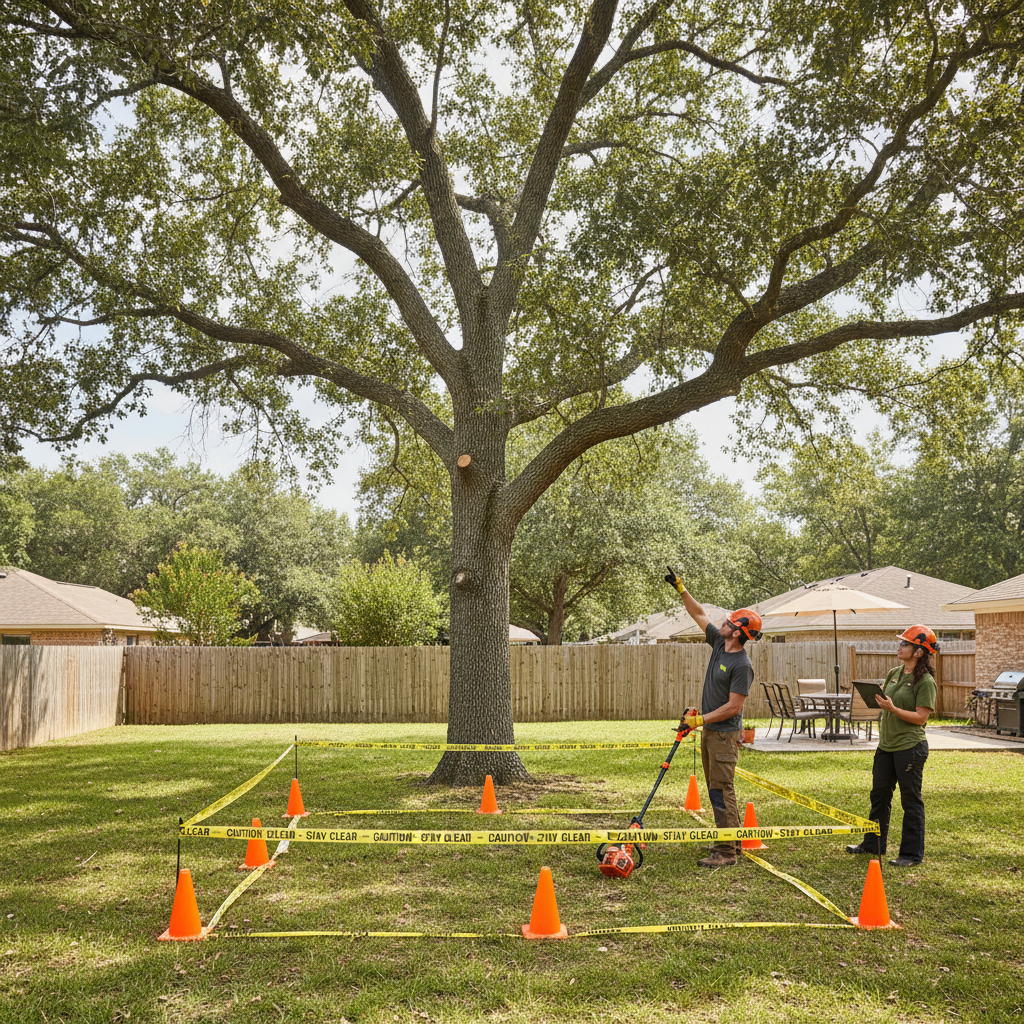
- Mark a drop zone you can actually enforce, cones, rope, or just a clear verbal rule with anyone nearby.
- Plan an exit step, one clean step backward or sideways, no tripping hazards.
- Keep the pole path clear, watch for other branches that can snag the saw on the way down.
How to cut branches safely (technique that reduces surprises)
how to use a pole saw safely from ground is less about strength and more about letting the saw work while you guide it. If you find yourself muscling it, something is off, chain sharpness, position, or cut plan.
Body position and control
- Stand to the side of the branch, not directly underneath it.
- Feet shoulder-width apart, knees soft, keep your weight centered.
- Hold the pole with two hands, keep elbows slightly bent so you can absorb movement.
- Keep the saw head slightly in front of you, avoid reaching fully overhead for long periods.
The 3-cut approach (for anything that could tear bark)
This is the same idea arborists use to prevent stripping bark down the trunk. It also makes the drop more predictable.
- Cut 1: small undercut a few inches out from the collar, cut upward about 1/4 to 1/3 through the limb.
- Cut 2: top cut a couple inches farther out, cut down until the limb breaks free, the undercut helps stop tearing.
- Cut 3: final cut remove the remaining stub just outside the branch collar, don’t flush-cut into the trunk.
If you only remember one thing: don’t try to “catch” the limb with the pole, let it fall in the zone you planned.
Common scenarios and what changes (table)
Different cuts feel similar until they don’t. Use this as a quick reference before you commit to the first cut.
| Scenario | What usually goes wrong | Safer adjustment |
|---|---|---|
| Limb over a fence/roof | Branch swings and hits structure | Shorten in small sections, consider rope rigging or hire a pro |
| Dead wood | Breaks unexpectedly, showers debris | Extra PPE, smaller bites, keep head out of fall line |
| Green, heavy limb | Pinches bar, tears bark | Use 3-cut method, avoid cutting too close on first pass |
| High angle reach | Fatigue causes sloppy control | Work in short sets, lower pole between cuts, take breaks |
| Dense canopy | Saw head snags on nearby twigs | Clear small obstructions first, keep a clean withdrawal path |
Hands-on workflow: a safe, repeatable routine
If you want a routine you can repeat without improvising mid-cut, this is it. Keep it boring, boring is good for safety.
- Walk the area, look up, look down, find trip hazards and anything fragile under the limb.
- Set your drop zone and tell anyone nearby what “out of bounds” means.
- Extend the pole only as much as needed, longer than necessary increases wobble.
- Start the saw before you lift fully overhead, get stable first, then raise into position.
- Make your first cut shallow, confirm the limb behaves as expected.
- Finish the section, then lower the pole and reset, don’t “hunt” for the next branch with the saw running overhead.
- Stop when fatigue shows up, shaky arms and rushed cuts show up fast with pole tools.
According to the CDC, chain saw injuries often involve lower extremities and hands, which is a good reminder: even from the ground, treat the tool as something that can injure you in a split second, and keep your grip and stance deliberate.
Mistakes I see most often (and how to avoid them)
These are the habits that turn a simple trim into a chaotic minute.
- Cutting straight from the top on a heavy limb: it can peel bark or pinch the bar, use an undercut first.
- Standing under the work: it feels like better control, but it puts you in the drop path.
- Overextending the pole: extra reach reduces precision, reposition your feet instead.
- Trying to cut “just one more” while tired: fatigue is when grip slips and you start forcing the saw.
- Ignoring small overhead obstacles: snagging the saw head mid-cut causes sudden pole movement.
One more subtle one: trimming near eye level while looking up, people forget branches can spring back toward the face when tension releases, keep your face shield or glasses on even for “quick” cuts.
When to stop and call a professional
There’s no shame in handing off the risky stuff. In many situations, a certified arborist or qualified tree service is the safer option, and sometimes the only sensible one.
- Any work near power lines, even if you think you can “stay away.”
- Large limbs that could damage structures, especially over roofs, cars, or neighbors’ property.
- Leaners, cracked limbs, storm-damaged trees, hidden tension can behave unpredictably.
- Rot, cavities, or dead tops, wood can break where you don’t expect.
- If you can’t create a clean drop zone, tight lots make this common.
If you’re unsure what “large” means for your species and tool, a local arborist can usually give a quick assessment, many companies will tell you plainly whether it’s a DIY trim or a rigging job.
Key takeaways (print this in your head)
- Plan the drop before you start the saw, the branch will fall somewhere.
- Stand out of the fall line, control improves when you’re not directly underneath.
- Use the 3-cut method on anything that could tear bark or swing.
- Stop when tired, pole saw work punishes shoulders and patience.
- Power lines change everything, bring in a pro rather than guessing.
Using a pole saw from the ground can be a genuinely smart way to prune, as long as you treat it like overhead cutting, not like mowing the lawn. Pick a reasonable limb, set a real drop zone, cut in a way that prevents tearing and pinching, and give yourself permission to stop when the job starts feeling “sketchy.” If your next session is on the calendar, start by sharpening the chain and walking the yard, those two steps prevent most of the drama.